
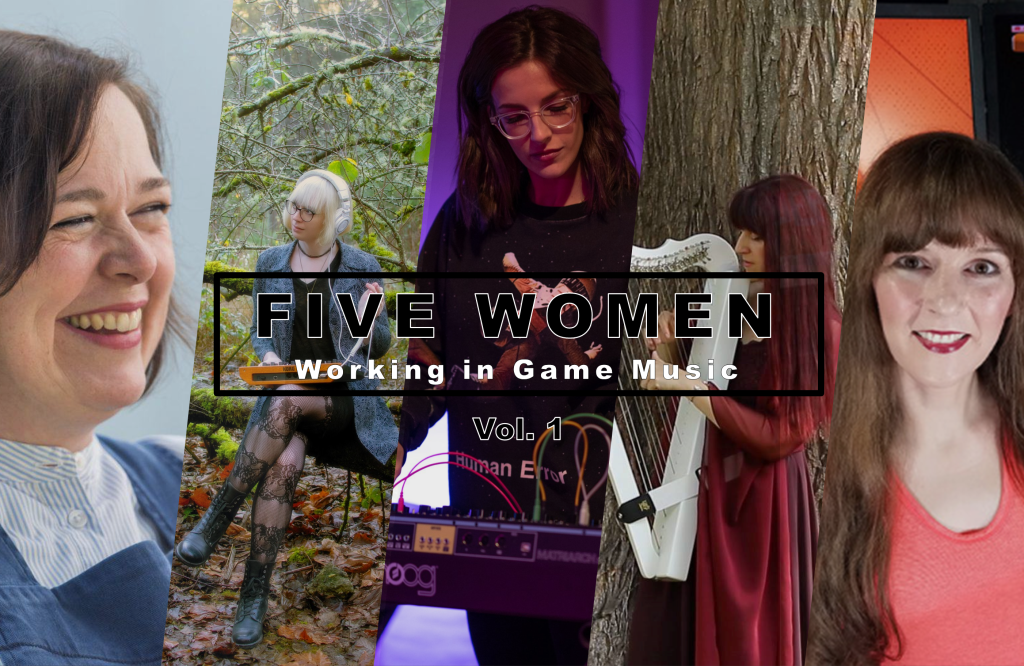
It’s not uncommon that among discussions of video game music, male names are the ones that more often pop up. They’re statistically the majority of the industry when it comes to composing. And yet, the world of game scoring was built on the back of many talented women. You have to look no further than to the careers of Michiru Yamane, Yoko Shimomura, Manami Matsumae, Kinuyo Yamashita, Tamayo Kawamoto or Harumi Fujita. And women have remained an important and valuable voice in game music to this day.
The truth of the matter is that, despite what the optics have to say, women are a huge part of the game audio department, far removed from being a minority that bears no impact in how the industry progresses and evolves, and their contributions should not, in any way, be overlooked. So, today, as part of the International Women’s Day, I thought to to do my part and highlight the careers of five women composing for video games right now.
A small disclaimer that I feel that I should add: This list is concerned with women working in the western sphere of gaming. I recognize that there are many more I won’t mention who are doing some truly fantastic work from Asia. But since it’s such a vast landscape with so many women with prolific careers to talk about, I’d much rather dedicate its own article to talk about Asian composers some time in the future.
Elitsa Alexandrova
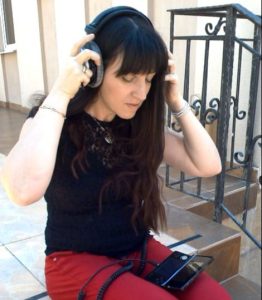 Despite being possibly the least high-profile composer on this list, Elitsa Alexandrova has quite some remarkable credits to her name, currently serving as in-house composer and sound designer for Ubisoft Sofia, an Ubisoft subsidiary based in Bulgaria. Alexandrova is also an accomplished pianist and harpist with many pieces of music published on her Soundcloud page.
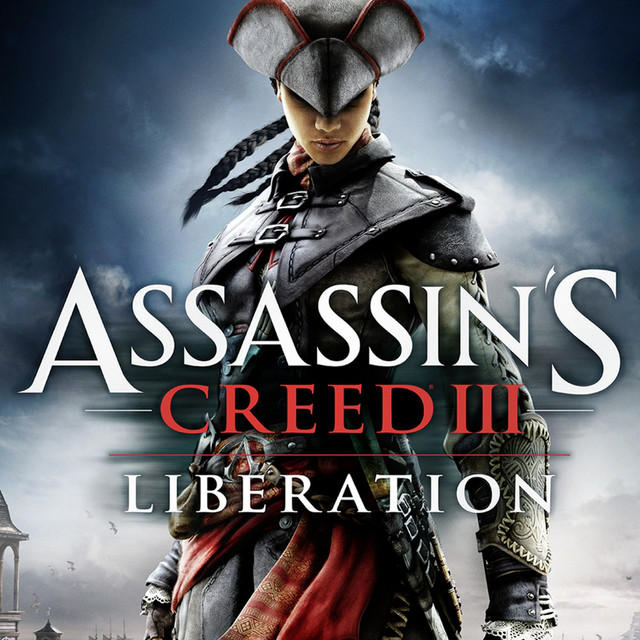
At Ubisoft Sofia, she oversaw the overall musical direction on 2012’s Assassin’s Creed III: Liberation, which was composed by Winifred Phillips. Alexandrova would then write herself the score to 2014’s Assassin’s Creed Rogue, becoming her biggest solo score to date. She also composed the score for The Curse of the Pharaohs, the second story-based downloadable content for 2017’s Assassin’s Creed Origins (whose main score was handled by Sarah Schachner). She most recently provided additional music to Assassin’s Creed Valhalla, released last year.
Aside from her contributions to the Assassin’s Creed franchise, Alexandrova has written the scores for Tom Clancy’s Ghost Recon: Shadow Wars, a game part of the Ghost Recon franchise developed exclusively for the Nintendo 3DS mobile console, and Horse Adventure: Tale of Etria, a mobile game for both Android and iOS.
 Her entire work is available for exploration on her Soundcloud page, but I heartily recommend her scores for Assassin’s Creed Rogue and The Curse of the Pharaohs, both of which are also available on the major streaming platforms. Rogue is a score beaming with life and color, running the gamut of period-accurate instrumentation, traditional orchestral scoring and complex synth work. This is a score entirely unafraid to embrace a diverse and disparate soundscape if it means it’ll be a good fit for the game. After all, the franchise has been populated by very good scores by a diverse number of composers who have faced similar decisions before and since, and Rogue is a worthy addition to the roster.
 The Curse of the Pharaohs has the particularity of having to bridge the gap between the identity of the base game’s score by Sarah Schachner and what the DLC requires of the music, since Alexandrova’s score is intended to be implemented alongside Schachner’s. She succeeds admirably, creating a score that doesn’t stray too far from what has already been established, but also has an identity and personality of its own, thus preventing the music from becoming a mere copy of Schachner’s score.
Elitsa Alexandrova is a very talented composer, and her credentials can attest to that. If her work on Assassin’s Creed Rogue and The Curse of the Pharaohs is any indication, we would be very lucky if we got to hear her musical voice more often.
Elitsa Alexandrova is available on…
SoundCloud: https://soundcloud.com/elitsaalexandrova
Twitter: https://twitter.com/ElitsAComposer
Facebook: https://www.facebook.com/ElitsAlexandrova/
YouTube: https://www.youtube.com/c/ElitsaAlexandrova
Jessica Curry
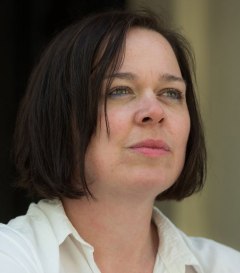 Co-founder of the British developer The Chinese Room and composer for all of its games, Jessica Curry has been a major presence when it comes to women writing music in video games for several years.
Her first major contribution came in 2008, writing for the game Dear Esther, The Chinese Room’s debut title and an indie darling that immediately established the developer as a company of whom to take notice. The game and score were subsequently remastered and re-released in 2012. Curry’s music for it is meditative, pensive, haunting, at times eerily unnerving, all while remaining deeply affecting and emotional. Most of these descriptives have come to encompass her music for The Chinese Room’s various games, which, alongside Dear Esther, have been Amnesia: A Machine for Pigs, Everybody’s Gone to the Rapture, So Let Us Melt and Little Orpheus.
Outside of the games industry, she has worked on commissions to write new music for the likes of The Royal Shakespeare Company, Magic Leap and The National Youth Choirs of Great Britain, and has recently been commissioned by the Crouch End Festival Chorus to write a choral work to be released in 2021. During 2018, she was London Oriana’s Choir’s composer in residence. She also used to be a presenter and radio host for the shows High Score and Sound of Gaming, both aired in the UK and the latter is available as a podcast through the BBC Radio 3 official website.
 The score that immediately comes to mind for me to recommend is what I consider her masterpiece, the score for Everybody’s Gone to the Rapture, a game released in 2015 for the PS4 (and a title that I hope to eventually cover in an article). Curry went on to win a prestigious BAFTA Award for Best Music for her work on the game. Rapture is also a game which she spearheaded as Creative Director. Her music for the game captures to perfection a striking balance between beauty and despair. There’s a deep sense of sorrow permeating every second of the music, always piercing right through to the emotional core of the story within the game, as you slowly unveil the tragic story of the inhabitants’ disappearance. And yet, there’s a somber hopefulness to the music as well, in keeping in line with the themes of the game itself. The marriage of the music with the scenes in the game makes for some of the most haunting and deeply impactful moments I’ve ever played in a video game.
 Most recently, she has co-written with Jim Fowler the score for The Chinese Room’s latest game, Little Orpheus, released last year and for which she has recently earned a nomination for Outstanding Achievement in Original Music Composition at the D.I.C.E. Awards. In complete contrast to most of her work, this score is a wonderful and vibrant homage to Russian classical composers. I haven’t had the opportunity to play the game yet, which is an Apple Arcade exclusive, but the artstyle and the music look like a match made in Heaven. This is a side of Curry’s music that we don’t often get to see, and I deeply appreciate that it exists. This is just lovely, lovely music.
If you’ll allow me a moment of honesty, I have a personal connection to Jessica Curry’s music, because her score for Everybody’s Gone to the Rapture helped me get through one of the toughest times of my life, and it was a place of solace and comfort in a time where the world would bring me none. For that, for how amazing a composer she is and for just how precious a soul she seems to be, I will treasure and champion her music for as long as I am able to. I am recommending you go listen to Rapture, but really, explore all of her work; every second of it is worth it, I promise you that. Her music deserves to be championed and celebrated. Expect to read more articles about her music down the line.
Jessica Curry is available on…
Bandcamp: https://jessicacurry.bandcamp.com
Website: https://www.jessicacurry.co.uk
Twitter: https://twitter.com/jessicacurry2
Winifred Phillips
 The most prolific composer among these five women, Winifred Phillips has been working in the industry for over fifteen years, with her first credit in a game score being for the original God of War game in 2005.
From 1992 to 2003, Phillips worked on a radio series called Radio Tales as a producer and composer, together with longtime partner, producer Winnie Waldron, producing over a hundred shows in their tenure.
They both made the jump to games with the aforementioned God of War, Phillips as composer and Waldron as music producer. Back when it was a common practice, Phillips wrote the scores for several tie-in video games based on popular films, such as Charlie and the Chocolate Factory, Speed Racer: The Video Game, Legend of the Guardians: The Owls of Ga´Hoole – The Video Game and Shrek The Third.
In 2014 she released a book called A Composer’s Guide to Game Music in which, as its name implies, she aims to provide “a comprehensive, practical guide that leads an aspiring video game composer from acquiring the necessary creative skills to understanding the function of music in games to finding work in the field.” On that same lane, she runs a very active blog where she constantly posts about several subjects, all concerned with game music, whether it’s interactive music systems and her own projects.
 Her most recent credits include the 2020 games Spyder, Life Hutch VR and the aforementioned Sackboy: A Big Adventure, for which she has just earned a nomination for a BAFTA Award for Best Music, alongside the rest of the composers team.
I highly encourage readers to seek out her music for the various LittleBigPlanet entries. It’s so full of life, creativity and vibrancy. Just the right amount of quirkiness and great sense of fun. The wickedly creative vocals (performed all by herself) of Victoria’s Lab from LittleBigPlanet 2 are the work of a genius. The music’s bouncy and childlike nature might put some people off, and if such is the case, there is so much more to be explored. Her music for Assassin’s Creed III: Liberation is a very solid entry in the franchise, while her score for the licensed Legend of the Guardians: The Owls of Ga´Hoole is absolutely wonderful fantasy music, boasting a large orchestral sound, energetic action music and just solid writing all around.
Winifred Phillips is a prolific composer with quite some years of experience on her back. And having read some of her blog posts, she shows the mark of a composer who cares about the art of video games, understanding that they require as much proficiency in handling the interactive implementation as they do in the mastery of musical composition. That’s a combination of skills that every respected composer working in games should have.
Winifred Phillips is available on…
Blog: https://winifredphillips.wordpress.com
Website: https://www.winifredphillips.com
Twitter: https://twitter.com/winphillips
Facebook: https://www.facebook.com/winifredphillips
Lena Raine
 I’ve written about Lena Raine pretty recently (just last week!) and how she’s a composer who fundamentally understands how game music works. She expertly applied her instincts as a storyteller and composer on Celeste, but she has many strengths that have come through on her various scores since bursting into the game scene in 2013 with the score for the collection of educational games Music Madness!
Raine is a prime example that being “classically trained” doesn’t mean being constricted to a specific sound, particularly that of the traditional orchestra. She grew up the child of a musician and was a choir singer. She went on to attend Cornish College of the Arts and got a degree in music composition. And yet, her outside-the-box musical instincts are so much of what makes her stand out and have such a strong musical voice of her own.
 Knowing that she wanted to write music for games, she started taking day jobs in the games industry after graduating from college, eventually landing one in ArenaNet, developer of the Guild Wars series of MMORPGs. She got to work as a game designer in the original Guild Wars, and through a series of opportunities, got to compose music for Guild Wars 2, and eventually co-write the score of its first expansion, Heart of Thorns.
She eventually left ArenaNet in 2016, and her music found its way to Maddy Thorson, who at the time was in the early stages of development of Celeste with the team at Matt Makes Games. The game would go on to become a smashing success and one of the most widely recognized games of 2018. On top of the following from fans of Guild Wars 2, Raine attracted even more attention because of how much people liked the score to Celeste. Her career as a full-time composer took off from there.
 Since then, she has gone on to write music for such prominent properties as Minecraft (writing the score for its Nether Update) and LittleBigPlanet (being one of a team of composers who contributed music to Sackboy: A Big Adventure). She has recently revisited the world of Celeste (albeit the original PICO-8 prototype, not the fully-fledged game of 2018) with the score to Celeste Classic 2: Lani’s Trek, released last January.
Upcoming projects for her include Chicory: A Colorful Tale, to be released later in the year, as well as a couple of untitled projects from Bunnyhug Games and Extremely OK Games.
 The easy recommendation from me would be Celeste, hands down— so far her strongest score, in my opinion. What I’ve said about the score can be found here. But the thing is, there is so much good stuff to be found exploring Raine’s music, that you can’t go wrong with anything. I haven’t even gotten to her non-game music, some of which is published under her stage name, Kuraine. I really like her album Oneknowing, which is ambient and low-key in nature, but packs a powerful emotional punch. You can even go back to the start of her scoring career, with Guild Wars 2, which is a diverse and exciting musical romp combining a small orchestra, some really cool vocal work and an energetic percussion section.
Lena Raine is such a singular voice in the games industry, and one so full of potential. Particularly seeing that she’s still relatively early in her career, it’s exciting to think of where she might go and how high she might fly.
Lena Raine is available on:
Bandcamp: https://radicaldreamland.bandcamp.com
Website: https://lena.fyi
Twitter: https://twitter.com/kuraine
Instagram: https://www.instagram.com/kuraine
YouTube: https://www.youtube.com/c/LenaRaine
Sarah Schachner
 During these last four years, Sarah Schachner has grown to become one of the most in-demand composers working right now. Having lent her talents to such mammoth franchises as Call of Duty and Assassin’s Creed, she has carved a giant space for herself in the AAA space.
Before all of this, however, she started out composing primarily for television, writing scores for such shows as Brew Masters and The Troop, before finding work with film composer Brian Tyler as an arranger on several of his projects, including the films Iron Man 3, Now You See Me and The Expendables 2. She got her first shot at a game writing additional music for Tyler’s score to Call of Duty: Modern Warfare 3, released in 2011, being later brought back by him to help on his scores for Far Cry 3, Army of Two: The Devil’s Cartel and Assassin’s Creed IV: Black Flag.
Such work got her acquainted with the developers responsible for the two biggest franchises for which she writes music: Ubisoft, whose various subsidiaries cyclically develop Assassin’s Creed games, and Infinity Ward and Sledgehammer Games, the two lead developers of Call of Duty games.
Her first major scoring opportunity in a game came with 2014’s Assassin’s Creed Unity, developed primarily by Ubisoft Montreal. She shared credit with co-composers Chris Tilton and Ryan Amon, though the three worked separately and with very specific purposes; Tilton was to craft the music for the main story, Amon for the modern-day sequences of the game and Schachner was assigned to write the interactive music for the various combat and exploration scenarios in the open world itself.
 It was from there that her career took off, with such high-profile credits to her name as Assassin’s Creed Origins, Call of Duty: Infinite Warfare, Anthem, Call of Duty: Modern Warfare (as well as providing music for its juggernaut battle-royale expansion, Warzone) and, most recently, the insanely-popular Assassin’s Creed Valhalla, co-composed with the franchise’s original composer Jesper Kyd, and featuring songs by Einar Selvik.
 If I were to recommend some of her work to readers, I’d point them in the direction of my two personal favorite works from her, Assassin’s Creed Origins and Anthem, as I believe they demonstrate in spades her two greatest strengths as a game composer: 1) her outside-the-box approach to scoring and how that leads to striking, but effective, choices in the sound of her scores —for example, the singing through vocoder for the main theme of Anthem is a stroke of genius, and 2) her ability to create entire worlds with her music, fully-realized, distinctive and beaming with life and personality in ways that very few composers ever manage to achieve. She’s an exciting musical voice in the games industry, and I feel that we’ve only just begun to see what she’s capable of.
Sarah Schachner can be found on…
SoundCloud: https://soundcloud.com/sarahschachner
Website: https://www.sarahschachner.com
Twitter: https://twitter.com/SarahSchachner
Instagram: https://www.instagram.com/minimoogs
YouTube: https://www.youtube.com/user/WelcomeGhosts73
 Game Music Hub