

Among the myriad of award bodies that every year celebrate accomplishments in excellence of video game development, the BAFTAs and the D.I.C.E. Awards are probably the two most respected.
The BAFTA Games Awards, much like the Film and Television counterparts, are organized by the British Academy of Film and Television Arts, and aim to “recognise, honour and reward individuals for outstanding creative achievement in Games.” Its first iteration was presented as the BAFTA Interactive Entertainment Awards from 1998 to 2002, before the introduction of the Games Awards, with the Interactive Awards being effectively phased out by 2006. Since this overhaul, BAFTA has made an aggressive push to have the artform of games stand on equal footing to film and television, and today its award body is one of the most well-regarded among industry professionals. This year’s ceremony will be held on March 25th at 7:00 pm, London time.
The D.I.C.E. Awards, for their part, are organized by the Academy of Interactive Arts & Sciences (AIAS). The Academy was founded in 1992 with the intention of being an analog to the film industry’s Academy of Motion Picture Arts and Sciences (AMPAS). Every year, the AIAS holds the D.I.C.E. Summit (D.I.C.E. being an acronym for Design Innovate Communicate Entertain), a gathering of industry professionals, of which its main event is the D.I.C.E. Awards. Due to the more industry-focused approach that AIAS takes to its proceedings, as well as the nominees being peer-selected, the D.I.C.E. are considered by some to be the most prestigious awards in the industry. This year’s ceremony will be held on April 22nd.
The category that brings us all here today is Music. The nominee pool is actually quite varied between the two, with Ori and the Will of the Wisps and Ghost of Tsushima being the only nominees shared between them. This is unsurprising, as I would argue that the industry had an outstanding year for music in 2020, in spite of the difficulties brought on by the pandemic and lockdowns. There was an embarrassment of riches last year, and it would have been fine if there had been no overlap between the two award bodies.
In that spirit, let’s just go right ahead and take a look at the pool of nominees from the two organizations.
Carrion
D.I.C.E. NOMINEE
 At first glance, a game like Carrion and composer Cris Velasco seem like an odd pairing. Not because Velasco hasn’t done horror before (he’s contributed to both Bloodborne and Resident Evil VII, after all), but because Carrion is an indie game from a tiny developer for whom the hiring of such a seasoned composer would probably be out of the question.
And yet, it was Velasco himself who approached the developers after a trailer for the game caught his attention. He immediately wanted to be part of it, and so the developers didn’t hesitate in bringing him in as composer.
Carrion is, in the words of the developer Phobia Game Studio, “a reverse horror game.” Instead of playing the defenseless humans fighting the horrific and deadly beast, the game has the player control the horrific and deadly beast as it goes on a rampage, killing every living thing it can encounter and seeking to spread and grow and feed at every step of the way.
Carrion is not the type of score that most would enjoy on its own because of its primarily synth nature. A lot of its construction is rooted more in sound design than in more traditionally structured music (though there is some of that as well). In-game, however, it’s extremely effective.
The entire audio department in the game is top-notch, as they impressively sell the weight, the danger, the menace and the carnage unfolding before the player’s eyes. The sound design and music have to do a lot of heavy lifting in that regard because of the relatively minimalistic graphics.
What’s most interesting to me about Velasco’s score is how straightforward it plays, and yet it never comes across as your generic horror score. That may be because the clever approach that the developers take to the typical monster story paints the score in a different light.
In a way, the score seems to find an interesting balance of taking on the perspective of the creature’s victims as well as of the creature itself. There’s a sense of power in the music that often seems to reflect the thirst for blood and flesh of the creature and how, most of the times, it’s never in any actual danger from the people, and on the other end, there’s still the deeply disturbing and horrifying nature to it as the game has you kill people to progress through the game and escape to the surface, much like any standard creature in a horror story.
It certainly does make for a striking experience while playing the game, as somehow, both frames of mind complement each other instead of being at odds with themselves. Most of all, I don’t think it ever detracts from just how fun the game is to play (which I realize is a very weird thing to say about a game featuring a highly-infectious organism that has the capacity of spreading throughout the whole planet without problem, but that’s video games for you).
Ghost of Tsushima
BAFTA AND D.I.C.E. NOMINEE
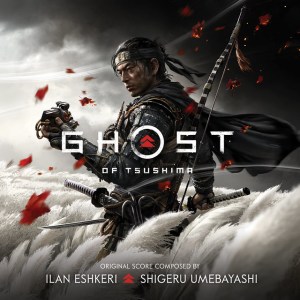 Ghost of Tsushima is a fantastic open-world game featuring satisfying combat and stealth, meticulous and gorgeous art design, entertaining (if repetitive) side-quests and collectibles and, above all, an engrossing story. It was developed by Sucker Punch Productions, and follows the tale of samurai Jin Sakai in the year 1274. The samurai have failed and the Mongols have invaded the island of Tsushima. Lord Shimura, Jin’s uncle and jitō of Tsushima, has been captured and it’s up to Jin to rescue him and drive the Mongols away from his home to save the people he loves. Thematically, the game is about a man who faces an internal conflict, torn between respecting and honoring the way of the samurai, or breaking the code and his honor to do what he must to save his home and its people.
The score was written by Ilan Eshkeri and Shigeru Umebayashi, in an accidental second collaboration after previously doing so for the film Hannibal Rising. I say accidentally because both composers were contacted separately and weren’t aware of the other’s involvement until they’d begun working on the game. Eshkeri and Umebayashi were tasked with tackling separate portions of it. Umebayashi wrote music for the open-world and a portion of the side-quests and Ilan Eshkeri developed the thematic backbone for the main narrative, and his score follows the main story threads of the game.
While the score is designed to ensure that the two composers’ work blends together smoothly in-game (and props for ensuring that consistency should go to the music team at PlayStation, led by legendary producer Pete Scaturro), if one is looking closely, one can see how both composers sought to approach their work. The differences are made even clearer on the album release of the score, which separate both composers’ contributions on a single CD each.
Shigeru Umebayashi’s music stays far closer within the now-familiar melodic and rhythmic realm that one has come to associate with modern orchestral Japanese music. A sound that, ironically, many Western people have come to be familiar with by way of the film The Last Samurai, scored by Hans Zimmer (though he’s by no means the one who pioneered it; there have been many Japanese composers who did that job before him). I feel that it wouldn’t be entirely unfair to say that Umebayashi’s music has many stylistic similarities to Zimmer’s music for the blockbuster, even if he doesn’t write in that same style of power-anthems that characterized the Zimmer scores of the 90s and early 2000s. Umebayashi’s music is richly melodic and expressive, whether through the use of a full symphonic orchestra or specialty Japanese woodwinds, plucked strings, percussion (Taikos!), and even kakegoe chanting. His work, like I mentioned, is neatly encapsulated on the album’s second disc, assembled into five suites, which are arranged based on the melodic content.
Ilan Eshkeri’s score, on the other hand, takes his approach a step further. Inspired by Sucker Punch Productions’ goal of painting an accurate representation of feudal Japan, he decided to make specialty instruments of the era the core of his music. He found his answer in a set of Japanese percussion, woodwind and stringed instruments, like the koto, shakuhachi, a variety of taiko drums, and especially the biwa, a stringed, lute-like instrument that was used by samurai and used to be very common among monks for telling stories but, as the time passed and the age of the samurai declined, so did the number of people proficient in playing it. Eshkeri was able to track down Junko Ueda, a student of one of the last great masters of the biwa, who only taught a handful of people before she passed away, and had her perform for the score.
A complication that he found while figuring out how to approach the music was that traditional Japanese music is rooted in two Pentatonic scales (the pitched instruments were only able to play five notes, with a few flourishes above and below them if you really knew how to stretch the instruments), making it very restrictive compared to the chromatic scale employed by Western music. But instead of scaling his approach back in favor of a broader musical palette (in which the orchestra with its full chromatic scale would be the primary force of the score), Eshkeri dove in head first at the challenge and crafted his entire score around these two Pentatonic scales. According to Eshkeri, even the orchestral parts could realistically be played by the Japanese instruments without issue. The result of all that work is a score that, even if you can’t quite put your finger on it, sounds unique and even has a rustic and ancient quality to it. Musically, it’s rooted firmly in the language of Japanese music. What’s even more impressive is that none of the emotional power and effectiveness in-game is diminished by this different approach.
Thematically, Eshkeri provides many themes for the various characters in Ghost of Tsushima, spearheaded by Jin’s theme (heard on the Jin Sakai track on the album). As a counterpoint to that, and almost like a tragic variation of Jin’s theme, there is what I call the Ghost’s theme (heard first on The Way of the Ghost), serving as a reminder of the internal sacrifices that Jin must make on his journey to free Tsushima. His uncle, Lord Shimura, also gets his own theme (in Lord Shimura), as does a secondary character called Lady Masako Adachi (heard first in Lady Masako), who has her own storyline. Eshkeri’s portion of the score plays to the deep emotions and tragedy inherent to the tale of the game, and it succeeds at that in spades.
With the contributions from both composers, the score to Ghost of Tsushima paints a detailed picture of Tsushima island and its inhabitants in their struggle to survive the Mongol invasion, as well as the internal struggle of Jin Sakai between seeking to honor the tradition of the samurai and his family, and doing what he must to save everyone.
Hades
BAFTA NOMINEE
 Hades spent almost two years in early access before being finally released on September 17th of 2020. The latest from Supergiant Games, Hades is a rogue-like game set in Greek Mythology following Zagreus, son of Hades, as he tries to escape the Underworld and get to Mount Olympus, where the other gods are waiting for him.
The game, as any rogue-like, is intended to be played multiple times, and each run represents an attempt to escape. Each run allows you to collect enough currency or resources to upgrade weapons, abilities and other gameplay modifiers and thus letting you get further and further in Zagreus’ escape. The curious thing is that Zagreus’ many deaths (a staple in any rogue-like), on top of being a mechanic, are a plot device which shapes the narrative. Supergiant Games experiments with procedurally-generated storytelling to mould the story of the game in many different variations (since you may encounter certain characters at different points in the runs and in different order, the possibilities for how the story unfolds are many, and the game is designed to accommodate for those differences to tailor the narrative to each player’s experience).
The score, like in all of the other games from the developer, was handled by Supergiant Games’ in-house composer, Darren Korb, who also doubles as the voice actor for Zagreus (that sultry voice!) and a minor character. The music is described by him as “Mediterranian Prog-Rock Halloween music”, which, oddly enough, is not a bad descriptor. The music is heavily influenced by Rock genres, to the point that all of the music for the various combat encounters has a Rock component to it, but I’ll get to that in a bit. It also features a number of lute-like Mediterranian instruments performed by Korb himself to represent the Greek setting of the game. As if such a bizarre combination of sounds wasn’t enough, often Korb brings in synths emulating a theremin for several portions of the action music, his reasoning being that the theremin represents the demonic nature of the Underworld, as well as the sillier aspects of the game, which ultimately never intends to take itself seriously and revels in its campiness and over-the-top tone (as if the Rock ensemble wasn’t proof enough).
As in previous Korb scores for other Supergiant Games, there are songs interspersed with the score, often sung by him and/or recurring collaborator Ashley Lynn Barrett, who also voices a character in the game. These songs, which include Hymn to Zagreus and Good Riddance, are stylistically within the same realm of the rest of the score (In the Blood is an absolute banger, if I do say so myself).
As I’ve implied already, the score is a pitch-perfect fit for the game. It’s just an absolute blast to listen to whether you’re playing the game or not. In-game, it somehow manages to tread a very fine line of utterly surrendering to the campy tone of the game while not mocking it in the process, and still manages to make the players feel empowered and like they’re having a fun time as they hack-and-slash through the various rooms of the Underworld. It’s a tough thing to accomplish, but the music is so good at finding that balance and running with it that it almost makes it seem natural and easy.
A new twist from the typical formula for other scores from Darren Korb is the inclusion of small symphonic elements, like woodwinds, a string quintet, a couple of percussionists and even some trombones. With a bit of orchestration help from Austin Wintory, these elements are featured in the final two tracks of the game, On the Coast and In the Blood. These instrumental additions don’t detract from the Rock foundation of the music, nor does that detract from the addition of these instruments to the mix. They work in tandem, beefing up an already robust sound and bringing a cycle of the story to a close in a satisfying manner.
From an implementation perspective, the score is really simple but effective. The score is laid out in three stages that the engine shifts around depending on the context. Usually, for the average combat in an area, the music playing will have a foundation of the Mediterranian instruments and some simple percussion and synthwork. This can shift back to a calmer variation maybe with the percussion removed or other instrumental lines (it really varies from cue to cue) for when Zagreus is not fighting anybody. Then, as you get to the final room, the Rock instrumental elements will kick in, since this is usually the most intense and difficult moment of any set of rooms in an area.
Hades is not really my type of game, but it does feature a score that is devilishly good by a fantastic composer whose work I’ve admired for some time now. It makes me really happy that both the game and his music has been so readily embraced by players, even beyond the people who were already fans of Supergiant Games’ work, if only because it means that he will get to keep making more awesome music for all of us to cherish.
Little Orpheus
D.I.C.E. NOMINEE
 I’ll just go right ahead and say that Jessica Curry deserves two things: More work, and more recognition for it. She’s one of the best composers working in games right now, and her partnership with Jim Fowler for this score is just the latest proof for it.
Jim Fowler himself is a renowned composer, arranger and orchestrator who has done a lot of work on Sony titles like Bloodborne, the Demon’s Souls remake and the LittleBigPlanet franchise (and most recently, on the music team for Sackboy: A Big Adventure, nominated for a BAFTA). He met Curry as an orchestrator for her score to Everybody’s Gone to the Rapture, and she brought him back for So Let Us Melt. Now, he joins as co-composer of Little Orpheus.
The game is the latest from The Chinese Room, an indie developer responsible for the indie darling Dear Esther, as well as other games like Amnesia: A Machine for Pigs and Everybody’s Gone to the Rapture. An Apple Arcade exclusive, Little Orpheus is set in 1962 as Soviet cosmonaut Ivan Ivanovich reappears after going on a mission to explore the center of the Earth. He’s interrogated by a general, to whom he recounts the story of his grand adventure. His journey has him encounter “lost civilisations, undersea kingdoms, prehistoric jungles and lands beyond imagination.”
Much like the game, the score is rooted in the atmosphere of lighthearted 1930’s serials, with every bit of the vibrancy, sincerity, fun and sense of adventure that characterized them. It’s also got a foot in the realm of Russian orchestral music as an inspiration, functioning in-game almost like a sincere parody of Soviet propaganda (which wouldn’t be that far off, given that the protagonist is Soviet himself).
And I’ll try to emphasize here that I don’t mean “parody” as a derogatory term, because I don’t believe for a second that the music is mocking anything. I do believe it’s smartly treading a balance between the protagonist’s origins and being self-aware enough not to take itself too seriously with it. It’s, after all, not necessarily condoning or promoting anything, it’s just having fun with the story. And on the other side, it’s not merely unsubstantial Russian quirky musical pastiche either, which is something that lesser composers could’ve easily fallen into. There’s real heart and emotion in the music, which is unsurprising from the people that worked on Everybody’s Gone to the Rapture and So Let Us Melt. The Russian elements are naturally integrated into the larger soundscape, and it’s such a brilliant match to the artstyle and humor of the game, that one can’t help but be charmed by it.
Thematically, there’s a recurring idea that runs through most of the score, introduced in the album’s opening track Comrades, to the Centre!, heard in contrabassoon. The theme appears in other moments in the game, and seems to represent Ivan himself on the journey. It’s the one melody that functions the most like a traditional theme. That doesn’t mean that the score is devoid of melody otherwise. There’s plenty of that to go around! The score is littered with localized melodies for the various areas visited in the game (like the recurring melody heard on And It Happened Like This, or a different one heard on The Prophecies of Lemuria), every one as vibrant and gorgeous as the last.
Something that is very impressive about the sound of the score (and this is a testament to the orchestration work done here) is that it sounds so much bigger than it actually is. The orchestra is relatively small, and yet the music is so rich, full of life and detail and colour that its scope seems much bigger. I made a similar observation of Austin Wintory’s superb Assassin’s Creed Syndicate, where he managed to obtain a rich sound out of a very sparse number of players.
Little Orpheus is such a delightful and emotive little score that deserves so much love thrown at it. Let’s hope that its nomination at the D.I.C.E. Awards helps boost its profile. Like I said in the beginning (and in another article), Jessica Curry’s work deserves all of the recognition and celebration that it can get.
Ori and the Will of the Wisps
BAFTA AND D.I.C.E. NOMINEE
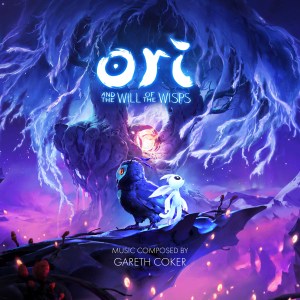
It’s unsurprising that the sequel to Ori and the Blind Forest yielded as score as strong as this one, and yet sometimes it’s unbelievable the quality of the music that we got. Gareth Coker returned for the sequel to the game that put him on the radar of many people (myself included) and which earned him a BAFTA win and a D.I.C.E. nomination for such a superb work.
Ori and the Will of the Wisps comes five years later after its predecessor, and expands and deepens many aspects of the game’s formula, not least of which are its combat system (which receives an overhaul from its skill tree system to collecting or purchasing individual Spirit Shards, which can be equipped to modify Ori’s abilities in combat and traversal) and its level design (which reflects more strongly its metroidvania roots by placing a bigger emphasis on progression through exploration and with the introduction of side quests).
Coker sought to deepen the sonic world of the franchise as well as the developers did while still being able to tell the game’s own self-contained story. In a more successful fashion, Will of the Wisps manages to pull off a satisfying blend of metroidvania game design and traditional storytelling (which usually oppose one another in this subgenre), and the music reflects that, providing the detailed musical world-building that metroidvania scores are so adept at and telling a traditional thematic narrative for the story of the game at the same time.
The many things that the score accomplishes for its game, and for the subgenre at large, make it, by far, one of the best game scores of last year (and my personal favorite score of 2020, from either film, TV or games), and one that has been widely recognized among fans of the game and Coker’s peers in the game industry. Proof of that is being one of only two scores (the other being Ghost of Tsushima) to be nominated, once again, in the Music category in both the BAFTAs and the D.I.C.E. Awards.
The composer brings in previous themes from the first game back to the sequel, the most prominent of which are what I refer to as the “Family Theme” (appearing in Ori, Lost in the Storm from the first game’s album, and it would be perfectly fine if you call this the main theme, as it really ties that score together) and Ori’s theme (featured extensively in the first game’s many chase sequences, and in Restoring the Light, Facing the Dark from the first game’s album).
Joining that duo are a trio of themes interconnected musically with each other– Ku’s theme (heard for the first time on We Named Her Ku on the second game’s album), Shriek’s theme (heard most extensively in Shriek, and as a contrapuntal line to Ku’s theme in Bone and Ash), and the Main Theme (heard on the track of the same name).
At a lesser scale there is what at first seems like a theme for a prominent secondary character named Kwolok (presented in Kwolok’s Hollow, Kwolok’s Throne Room and Kwolok’s Malaise) but eventually comes to encompass the character of Baur and his territory (Baur’s Reach, In Wonderment of Winter, A Snowy Skirmish). I do wonder whether this theme is intended to represent the greater figures of authority and respect in the land of Niwen, or even a theme for Niwen itself.
Will of the Wisps is a considerably darker endeavour than Blind Forest, and to address that tonal shift, Coker relies a lot more on the gravitas of a large-sized orchestra, and this time adding a choir to the mix (the Philharmonia Orchestra and the Pinewood Voices, respectively) while still retaining the familiar touches of solo woodwinds and twinkling pitched percussion that made the first score such a magical experience.
On that same note, Gareth Coker’s instincts for drama continue to be pitch-perfect, with the score being a rollercoaster that nicely compliments the emotional journey that Ori and Ku undergo from beginning to end. From the first time that Ori is dropped to explore on their own in Niwen, presented as Separated by the Storm on the album, set to the sparse and anguished tones of a piano and string orchestra, while an oboe carries a melancholic statement of Ku’s theme, going through the creepy atmosphere of Shadows of Mouldwood where Coker treats his string orchestra to deeply dissonant and tortured effects, to the tragic sight of Shriek’s devastation of the Silent Woods in Ash and Bone, all the way to the heartbreaking end of the game, Coker is always able to convey the right emotional response to the player with such seeming naturality. It’s uncanny how good he is at capturing the emotional core of a story.
On the implementation side of things, I feel that this score is quite special in much the same way that the first one was, because it pushes on that same front but even harder than before. It’s uncommon for Metroidvania games to have scores with a traditional narrative or even any sense of overall dramatic flow. Usually, it’s just a collection of pieces tonally similar but usually restricted to just addressing very specific things in the game.
This is often because Metroidvania scores approach the game from a geographical perspective (as, for example, a single track is only used in a specific area, or in a fight with a boss that you never see again after you’ve defeated them). And while Gareth Coker does a fair bit of that in both games, in this one he takes the narrative approach to heart in the music.
Changes in the story trigger musical changes to the cues attached to specific areas in the game, in much the same way that the world changes as the story progresses. The aforementioned Separated by the Storm is used as the initial looping cue for Inkwater Marsh, but that changes to Now Use the Light, We Want to See! after the defeat of a boss (Howl) and more areas in the marsh becoming accessible to Ori. Kwolok’s Hollow is the initial cue for the area of the same name, but after the discovery of a special ability that allows Ori to progress through, the music changes to Bashing and Dashing.
Such changes are intended to reflect the progression and evolution of Ori’s journey, and of you as the player. It’s also a commentary of how every action that the player takes is affecting the world of the game and the characters within it. This is a story where things DO happen and you as a player understand what it means that they’re happening– unlike some more traditional Metroidvanias where every action you take is just the means to keep progressing, whether or not the game has explained to you the in-game importance of your actions.
This heavy adherence to narrative in the music sounds, to a degree, revolutionary, and yet it also sounds like the most logical approach to take, so it is weird to think that it isn’t more common in this subgenre in gaming. It certainly benefited Ori and the Will of the Wisps which, musically, is one of the most satisfying experiences I had playing a game from last year.
Sackboy: A Big Adventure
BAFTA NOMINEE
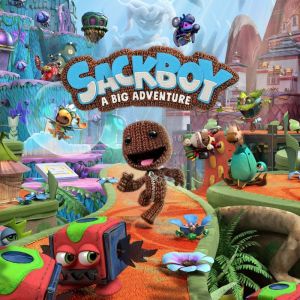 Sackboy: A Big Adventure is the latest entry in the LittleBigPlanet franchise (and a spin-off from the main series), and its gameplay is not far off from the previous games, with the new addition of 3D level design, as opposed to the 2.5D platforming found in the other games, as well as fun new additions to the combat.
Another staple from the LittleBigPlanet series returns for Sackboy, and that’s the eclectic nature of the music. Blending together an original score and a host of licensed songs from other artists, the musical soundscape of the franchise has always been intentionally disparate, even though efforts have been made to unify the musical sound of the franchise in each separate game.
At first glance, Sackboy seems like an odd nomination, given the overwhelming presence of licensed music in the game, but the BAFTA Awards overhauled its Original Music category to just Music years prior, in an effort to also recognize those games that make excellent use of licensed music. Such is the case with Sackboy.
And it’s not that Sackboy doesn’t have an original score either. Like I mentioned, it does, and a lot of it is fantastic. In typical LittleBigPlanet tradition, the score is made out of contributions from many composers, each of them contributing music for specific levels in-game. This separation allows them the freedom to come up with a distinctive sound for their designated level or levels. The game credits Joe Thwaites, Jay Waters, Nick Foster, George King, Lena Raine, Brian D’Oliveira, Winifred Phillips, Opiuo, Tendai Humphrey Sitima and Glen Brown as contributing composers for the game, as well as special arrangements of licensed music done by Glen Brown, Jim Fowler, George King, Brian D’Oliveira, Winifred Phillips, The Bikini Beach Band and Nick Foster.
That is a handful of people alright. Unifying all of those different voices is lead composer Joe Thwaites (having a similar role in previous LittleBigPlanet games), seeking to bring the licensed music and the original score even closer together this time around.
The score, as is usual, runs a gamut of several moods (that will often depend on the level and the composer it was written by), from funny, to relaxing, to energetic. You name it. From the whimsical, vocal-based tracks by Winifred Phillips, to the folk-pop vibes of Jay Waters’ tracks, to the electro-jungle sounds (which is a descriptor I never thought I would use) of Brian D’Oliveira’s music, even the more cinematic music that Nick Foster wrote for the cutscenes and the EDM-infused tracks from George King. The score has truly got it all.
Just as much fun are the arrangements of licensed tracks. My favorite of them is the absolutely hilarious rendition of Material Girl by Winifred Phillips. Featuring her trademark la-la-la vocals (performed by herself, I wouldn’t have it any other way), she transposes the Madonna iconic song to a small orchestra and solo piano and creates a wonderful waltz that accompanies the surreal “Bubble Jeopardy” level. This one has to be heard to be believed; it’s just so good. Also quite fun is Brian D’Oliveira’s arrangement of Depeche Mode’s Just Can’t Get Enough, transposed to the jungle soundscapes of wooden percussion and ethnic woodwinds of his original tracks (minus, interestingly, the electronic elements), brings in a whole different vibe to the original melody.
The score is implemented with a surprising level of detail into the game. Thwaites and his team ensured that even the licensed tracks that were used in their intact form in the game still functioned like a normal game score, and devised a way to break down the musical components of them to be able to procedurally implement them the way that they did the original music. In that regard, the music reacts to many of Sackboy’s actions in the game so that different elements come in if he’s suddenly fighting someone, even to the point that the music can slow down if he stops completely, only to kick back up if he begins moving again. As proof of that, I’ll leave a link to a Twitter thread where both Thwaites and Jay Waters talk about certain systems at play during the game, such as how certain moments in-game are synced to the beat of the music, or how Sackboy’s theme (Sackboy: A Big Adventure Main Theme) pops up every time that the player picks up a collectible in the same arrangement as the music of each level in the game.
Though I can understand that the music can be irritating and obnoxious to some people, I believe the use of music in Sackboy and in the LittleBigPlanet franchise at large is very well-conceived. Nobody can really argue against the amount of effort and talent that goes into making what is essentially a baby game (please don’t crucify me for that term, I’m joking). The team effort works really well and the composers’ several voices integrate naturally in the big picture and the way that it’s implemented is thoughtful and detailed.
Spider-Man: Miles Morales
BAFTA NOMINEE
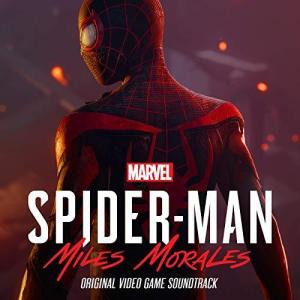 Spider-Man: Miles Morales is set about a year after the events of the last DLC from the original Spider-Man game, and features Miles Morales becoming New York’s Only Spider-Man after Peter Parker temporarily leaves for another country. In that time, the rise of a terrorist group known as the Underground, led by the mysterious Tinkerer, seeks to destroy the Roxxon company, even if it means wreaking havoc in the process.
John Paesano returns to score the game after scoring the 2018 predecessor. With a pre-established sound created for the original, Paesano had to expand on what was there while still providing the game with its own identity. The starting point for that was with writing a theme for Miles, like he wrote a theme for Peter. Though the theme debuts on the album in the opening track, Don’t Give Up, it’s rarely presented in that fashion (which resembles the 2018’s original style more than Miles’ game itself). For a more accurate representation of it, look no further than in New York’s Only Spider-Man, where the swelling orchestral base and the melody (which are very intentionally cut from the same cloth as Peter’s theme) are accompanied by hip-hop production. This blend of urban rhythms with orchestral writing defines the sound of a lot of this score, as Paeano seeks to acknowledge Miles’ background, youth and Harlem at large.
Much like in the predecessor, many of the story elements in Miles Morales are acknowledged by the score (like Roxxon and its president, or Miles’ uncle Aaron), but the two most important ones to the musical narrative in the game (other than Miles’ own theme) are the themes for the Underground and its leader, the Tinkerer. The Underground carry with them a complete soundscape beyond just the melody, comprised of a mysterious but relentless ostinato and furious synth runs. This soundscape is often shared by the Tinkerer’s thematic statements (which is entirely appropriate). The best encapsulation of the Underground’s material, unsurprisingly, is the track The Underground.
The Tinkerer is the meatier of all the secondary themes in the score. I can’t really speak about this theme without going into spoilers, so suffice to say that it’s the most versatile melody of the bunch, as Paesano treats it to a number of different variations to fit several purposes and paint a multi-layered picture of the character the same way that the game does. By the time that the theme reaches its natural conclusion in Make It Right (which scores the cutscene that concludes the final boss fight), it’s been through a very satisfying journey, particularly as a foil to Miles’ strong theme.
As a side note to that last part, the music for the final fight between Miles and the Tinkerer is so mind-blowingly perfect in a narrative sense that it had me tearing up at the sheer emotion of it all. Listen for the second half of Worst Enemies on the album as Paesano pits both Miles and the Tinkerer’s themes contrapuntally in increasingly anguished and emotional statements. The storytelling and the emotions behind it are so strong and palpable that they make a pretty excellent fight even better. One day, we’ll elaborate further on that boss fight. There’s much to say on the matter.
Overall, Spider-Man: Miles Morales is a fantastic improvement over what was already a pretty solid base, written by a composer who so clearly understands storytelling, drama, and most importantly, how they work in the context of a game.
The Last of Us Part II
BAFTA NOMINEE
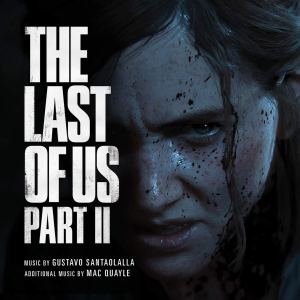 The latest game from the juggernaut AAA developer Naughty Dog is the sequel to the highly acclaimed and popular The Last of Us. There’s very little I can say from this game that people well-versed in the gaming world won’t know already, since The Last of Us Part II was the subject of public discussion for many months running up to its release in June of last year and many months after it.
It was the subject of a massive leak in April, in which major plot points, gameplay footage and cutscenes were released to the public. It was also subject to user review bombing on release day, partly in response to the leaks revealing controversial story content without full context for it. The controversial story choices themselves would be the subject of thorough online discourse (or, well, as thorough as you can have it in public online spaces) once people got to experience it. The game was also the subject of an exposée about the working conditions at Naughty Dog, which revealed a prolonged crunch period in the last stages of the game, even as it had already been delayed twice by Sony (and a recurrent working practice in Naughty Dog’s previous games).
So, you know, there were many things to chew on regarding that game before and after it came out.
As for the game itself, The Last of Us Part II has been almost universally well-received critically and became the fastest-selling PS4 exclusive of all time, as well as one of the best-selling titles for the console. Come the end of last year, the game earned the record for most Game of the Year awards won by any game in existence from award shows and gaming outlets, in addition to many awards and nominations in various categories, to which is now added a BAFTA nomination for Best Music.
The game is set five years after the events of the predecessor, and continues the story of Ellie who, after a personal loss, sets out on a journey of revenge that will make her cross paths with Abby, who is trapped in a conflict between a military faction and a religious cult, and whose story is meant to mirror and compliment Ellie’s, telling a cautionary tale that touches upon vengeance and the cycle of violence that comes with it, grief, the loss of identity, alienation, trauma, and most importantly, it makes a case for choosing to have deep empathy and compassion, particularly for one’s enemy.
Gustavo Santaolalla returned to write the score for the sequel and builds upon the soundscape and melodic material he created for the predecessor. New to the proceedings is Mac Quayle, who is credited as additional composer, and joins Santaolalla for the sequel.
Like in Ghost of Tsushima‘s collaborative effort, there is a clear distinction between Santaolalla and Quayle’s contributions for this game, as they were both tasked with different roles to address. While Santaolalla traditionally provided the emotional core of the music to support the cutscenes and the major story moments in the game, Mac Quayle joined in to provide the adaptive music for the gameplay moments, typically as the player is confronted with either stealth or combat scenarios.
Mac Quayle’s interactive music is perfectly fine and enhances the feelings of dread and tension and even weariness inherent to the gameplay loop of the game. The combat and stealth can be quite brutal and exhausting (and can become unbearably tense in higher difficulties), and Quayle addresses that in a competent fashion. His music is much more electronic in nature, compared to the mostly acoustic soundscape that Santaolalla provided for the stealth and combat encounters in the first game. His music pulses and screeches away as you deal with enemies and waxes and wanes with the flow of combat (particularly in response to the player getting spotted/getting out of sight). In parts it even reminds me of the more abrasive portions of Jóhann Jóhannsson’s score for the film Sicario, with its incessant pulsing and dark electronic crescendos.
It’s with Gustavo Santaolalla’s music, however, that I find the most interesting portions of the score. He approaches the second game much like he did with the original, by largely eschewing the notions of strict thematic applications, and the game’s music is much stronger for it. There is still no Ellie theme, no Joel theme, and there aren’t any themes for new characters like Abby, Dina, Lev, Owen or Jesse. I would argue that such an approach, while probably yielding an effective score, would be taking the obvious path. It would be addressing textual information that the dialogue, performances and even cinematography are already conveying.
The non-obvious choice is to cut right through all of that and address the emotional state of the characters. The way that Santaolalla captures emotions with such seemingly simple musical ideas is precisely why the first The Last of Us is such a transcendental experience and, for me, one of the best video game scores of all time. And he doesn’t do any different here.
Santaolalla’s music, without fluff, without artifice and completely unassuming, is able to provide a deep emotional dimension to a very complicated story, often revealing unseen layers to broken characters that don’t know how to say what they are feeling, and whose actions often run counter to them. Sometimes it even comments on the broken world that they live in.
I think that so much of that complicated emotional baggage that comes with the game’s story is so succinctly captured in one of my favorite tracks of the score: Allowed to be Happy. The melody featured in it is extremely simple, and yet it packs such a deep emotional punch. It somehow seems to capture really well the profound pain that comes with Ellie’s inability to process her grief after her tragic loss, as well as Abby’s journey to redeem herself for the actions from her past.
While I don’t think Santaolalla recaptured the magic of the original game (that’s an unrealistic expectation), his score often measures up really well to the game that it was written for. My only complaint with it is that it doesn’t quite come together as I believe it could have because of the disconnect that exists between the sonic worlds provided by both composers, which instead of complementing one another, can sometimes feel like they’re undercutting each other. A little more unification of sound would have gone a long way in them not feeling like jarringly different approaches.
The Pathless
D.I.C.E. NOMINEE
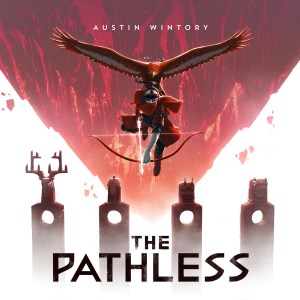 The Pathless is the latest game from Giant Squid, the developer behind ABZÛ, also directed by Matt Nava, the art director from Journey. The game’s narrative has a character only referred to as The Hunter arrive on a mysterious island that serves as the game-world, where she is to rid it from the villainous Godslayer, who has corrupted the four children of the Eagle Mother, goddess of the realm. These four children, now demons, roam through four different plains of the island, and it’s the Hunter’s role to battle them and free their spirits.
This game marks Austin Wintory’s fourth D.I.C.E. nomination, having won previously only for his score on Journey, and while he’s not nominated for the BAFTAs this year, he’s been nominated four times already, with only one win for Journey as well.
Much like ABZÛ, The Pathless takes on an allegorical approach to its storytelling, where the narrative is presented more as an ancient, mythical tale of gods and demons than a grounded story with relatable stakes or traditional character arcs. The game plays like a tale sprung forth from its own culture. And that faithful approach to its own fictional culture is what sells the breadth and scope of its world.
That approach carries over to the music as well. With the score, Wintory has to capture the world of the game and sell it as authentic. To that end, he brings in a disparate array of ethnic instruments from around the world, in a deliberate attempt to combine different musical cultures into a single one that doesn’t resemble any one of them in particular, since drawing specific attention to any real-world culture would’ve been counterintuitive to the developers’ intent.
The instrumental ensemble is spearheaded by the fabulous Alash Ensemble, a trio of Tuvan throat singers whose vocals and instruments serve as a connective tissue throughout the several narrative applications of the different instruments. Backing the Alash Ensemble is the nyckelharpa which, narratively, seems most closely related to the Hunter, a large percussive ensemble and the familiar sounds of a string orchestra and a French horn section. Since orchestral instruments are already subconsciously considered to be universal and larger-than-life, they don’t come across as disruptive elements when they come into play.
Thematically the score is very light, as it relies a lot more on said instrumentation to convey a sense of geography and progression within the game’s internal narrative. There is one theme, heard on the album in None have Returned, which is the menu screen music, and is meant to serve as one of the only melodic throughlines across the largely themeless score, representing the Hunter, the game’s protagonist; the melody is typically performed on the aforementioned nyckelharpa. The four children of the Eagle Mother are represented in the score by four distinctive instruments– oud (a type of lute) for Cernos, double bass for Sauro, bamboo flute for Nimue and bass clarinet for Kumo.
Wintory smartly peppers these instruments throughout the score as you roam through each region, solving puzzles and freeing towers– so that you’ll hear double bass passages as you’re exploring Sauro’s side of the island, bamboo flute on Nimue’s, and so on. He then goes full-force when it’s time for the Hunter to confront them, almost making each boss fight a small concerto for each of the different instruments.
As ingenious as the musical depth and detail in this score is, its implementation is what finishes selling its brilliance. The Pathless is an open-world game, and it’s a rare open-world game that embraces continuous scoring as you explore it. It’s usual for developers to just dial back the music or cut it completely as the player free-roams through the game’s world– it’s an efficient way to deal with the inherent repetition of music implementation.
For The Pathless, Austin Wintory and Giant Squid worked to find a solution to this so that the score could realistically be playing while free-roaming for a lengthy period of time before the player could even notice repetition in it. To that end, the score is written and implemented in an extremely broken down fashion and the engine programmed to intuitively add or subtract musical layers to any given track, as well as seamlessly blend in and out of different musical cues, and such changes are all in response to the player’s actions, whether based on their speed while traversing, the specific area they’re in, or even changes in altitude. The result of all of this work is a score that, at first glance, dodges a lot of issues that certain open-world scores run into and proposes innovative solutions to be iterated upon by future composers and developers.
The fact that on top of that is a fantastic musical journey (pun intended) through a rich, extremely detailed world, beaming with emotions and thrilling action and adventure, well, that just makes it all even better.
The BAFTA Games Awards Ceremony will take place virtually this Thursday, March 25th at 7:00 pm, London Time.
The D.I.C.E. Awards Ceremony will take place virtually on Thursday, April 22nd.
 Game Music Hub