

In 1997, Square released a landmark title for the video game industry, a game so revolutionary and influential that its effects in modern game development are still felt to this day and probably will continue to be felt for decades to come. This game was one of the first to be considered a AAA title, and it served as a massive leap forward in video game storytelling, graphics (both pre-rendered and real-time), and yes, music. This game was Final Fantasy VII.
Its score, written by the legendary Nobuo Uematsu, was for a very long time considered a benchmark for sophisticated orchestral writing in video games, and introduced many players to the notions of thematic musical storytelling in ways that were ubiquitous with film and TV, but rarely with games.
Final Fantasy VII is notorious for many things, one of which is its now-iconic opening cutscene. Though its graphics and sampled music may not stand the test of time to more modern players, its unfolding up until the reveal of the title card is pitch-perfect and does a fantastic job of introducing you to the game without a lick of dialogue. The fact that Square Enix changed very little of it for its Remake is a testament to the power of that opening tracking shot.
It’s undeniable that the title reveal alongside Uematsu’s masterful fanfare packs quite an emotional punch. You feel simultaneously excited as the game invites you on an epic adventure, intrigued at the mystery of the very first few seconds that the game presented to you, and in awe of the game world (and bear in mind that Midgar is only a tiny fraction of where the game ultimately takes you). So many cool things being done in service of everything that a great title sequence should do– get you excited to begin the game.
You might be wondering by this point why would I choose to begin this article ranting about a twenty-four year old game (it’s almost as old as I am!), and you might be justified. We are here to talk about Ghost of Tsushima. The point of having a prelude with Final Fantasy VII (score pun absolutely intended) is that, by and large, that game helped popularize the cinematic presentation of games, particularly when it comes to cutscenes, pre-rendered CGI, title sequences and credits. Not many games had attempted it on this scale before simply because the technology wasn’t readily available, which is why one could understand the game’s 40-million reported budget. You could make the argument that the experimentations of Square in VII were one of the final pushes that tipped the industry into the world of 3D graphics as we now know them.
Many developers have since adopted a more cinematic style for their games. You have to look no further than the entire catalogue of Hideo Kojima, also a pioneer in this regard with his first Metal Gear Solid, and who infamously slaps his name and/or the game’s title no less than ten times in each of his games.
That brings us, finally, to Ghost of Tsushima, developed for the PS4 by Sucker Punch Productions, a relatively small first-party studio owned by Sony (small at least by Sony’s standards). It tells the story of Jin Sakai, a samurai living on the island of Tsushima during the first Mongol invasion in the 13th century.

The score was written by Ilan Eshkeri and Shigeru Umebayashi, their second time providing music for a single project after the film Hannibal Rising. Despite the official credit alluding to otherwise, the two composers were actually contacted separately and mostly worked on their own, with very little overlap between them. While Umebayashi was tasked with creating the music for the open-world activities and side quests, Eshkeri handled the main story portion of the score, and thus got to write the thematic backbone of the music.
Though it features exciting combat, well-designed stealth and gruesome violence, the story of Ghost of Tsushima is actually a sensible exploration of what it means to have honor through the eyes of a man who has to sacrifice his own sense of self to save the people and the island that he loves. It’s a tragedy, a tale of heroics and sacrifices, of pain, suffering and struggle, an epic in the traditional sense of the word.
And while the game takes many inspirations from those traditional narrative epics, particularly films, it also provides its own twist to them by bringing the only thing that neither film nor traditional literature can– interactivity.
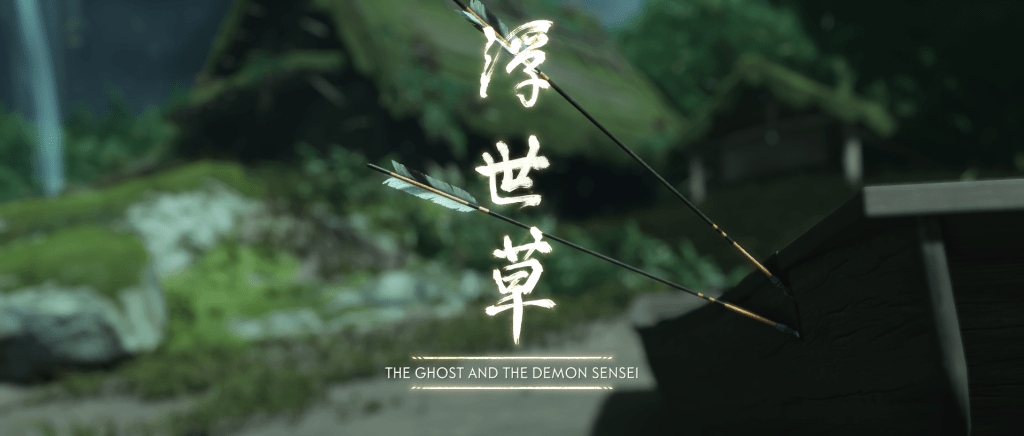
One of the most important aesthetic choices that the game draws from film are title cards. Sucker Punch designs a stirring sequence for the title reveal of the game in the grand spirit of old-fashioned epics. Each of the game’s quests, whether optional or part of the main story, also begin with a custom title card, with Japanese writing above the quest’s title being superimposed over an image that relates to the quest in some way, mostly like this:
The thing I want to talk about is Ghost of Tsushima‘s masterful use of music during the game’s title reveal, which comes after a lengthy, playable prologue.
Despite Ghost of Tsushima being an open-world game, in which player agency is key, this one-hour prologue is heavily linear and directed, as it focuses on setting up plot and characters, but also mechanics and level design. Therefore, the developers have you move from A to B, which gets you to C, after which you have to move to D, until you reach the end of the sequence. In many ways, the prologue serves the function of a tutorial before the game allows you to have that full agency over where you choose to go.
This structure is actually nothing new, since many open-world games spend its opening moments on a scripted quest that accomplishes the same function. Series like Assassin’s Creed, Far Cry, Grand Theft Auto and Red Dead Redemption are designed like this to varying degrees of success (Assassin’s Creed Odyssey designing a prologue that can last for almost three hours before being allowed to free roam the world is something that will never leave my mind, and I don’t mean that as a compliment).
After those linear quests, the game has to inevitably let the players know that they’re free to explore the open world as they please. Some games just throw the players in and expect them to understand, some others have some pop-up via the game’s UI (user interface) letting them know, and a few more use this moment to insert the title card or a title sequence. This is where I believe that Ghost of Tsushima excels.
The game opens with the night of the Mongol invasion on Tsushima Island, and the massive defeat of the samurai army at Komoda Beach. Jin being among them, is one of the few survivors of the battle. Being left for dead, he’s rescued by a woman named Yuna, who helps him travel to Castle Kaneda to attack it and rescue Lord Shimura. He ends up fighting Khotun Khan, leader of the invaders, and loses, being left for dead again. He reunites with Yuna, swearing to rescue his uncle by whatever means necessary, realizing that it’s going to take more than his honor and his traditional samurai fighting to do so.
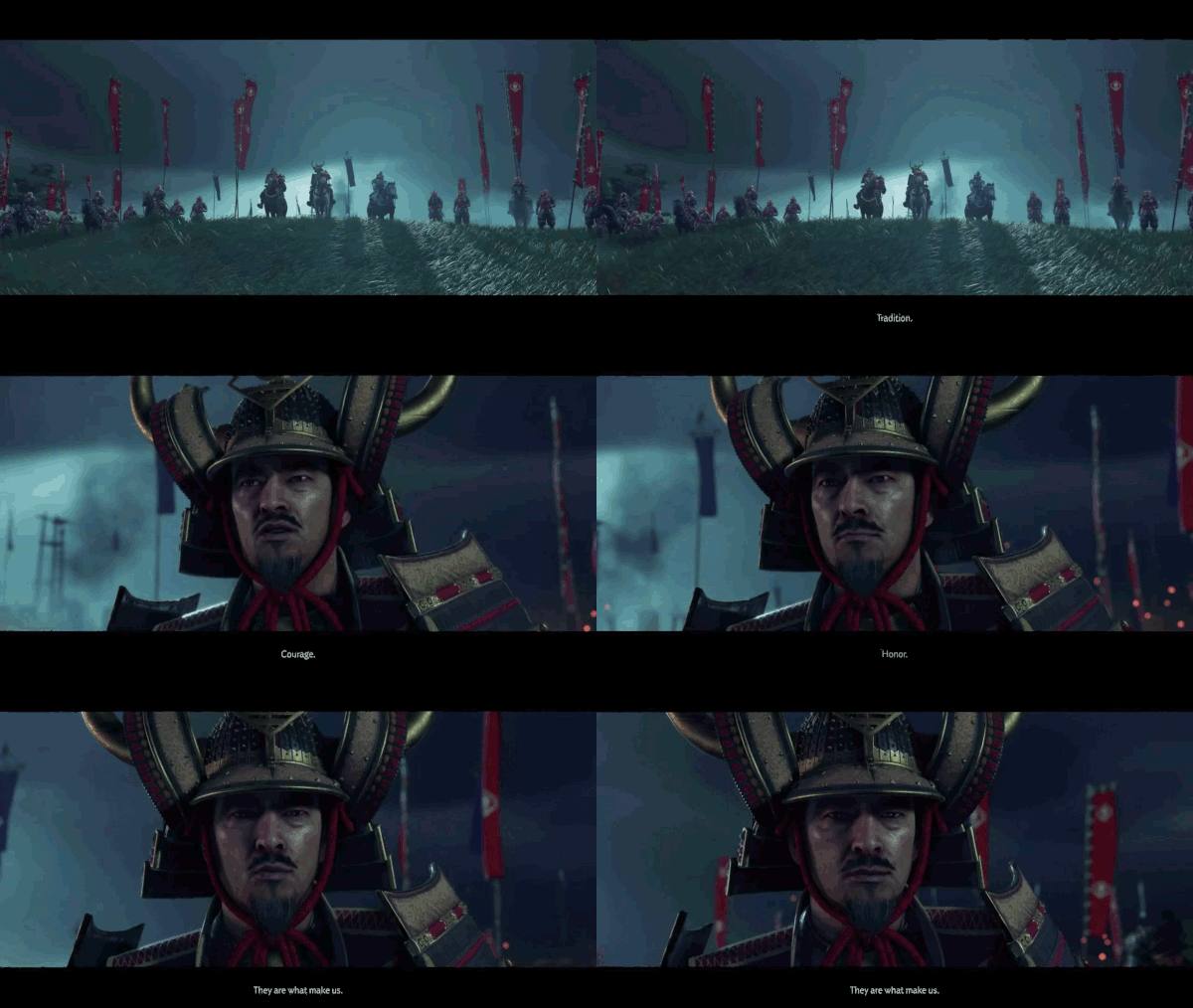
Before the credits roll, the game has already taught players basic mechanics like how to do horse riding, how to fight on horseback, how to do basic combat on the ground, how to heal, gather resources, as well as how to navigate stealth scenarios and how the game aims to guide the player throughout the open world (the interesting Guiding Wind mechanic). It has also shown them the setting of the story, introduced them to the main characters and the conflicts, both physical and psychological, that they will confront as the story unfolds.
The music has a different, but similar, role to the narrative and gameplay goals of the prologue in that its intent, on top of providing dramatic support for the sequence, is to introduce players to the musical soundscape crafted by the two composers, as well as to some of the most relevant thematic ideas that will recur throughout the game.
Lord Shimura’s theme is introduced here (on the album his theme can be found on the appropriately named Lord Shimura) in various guises, resolute and proud on the night of the battle, or warm and emotional for the flashback sequences.
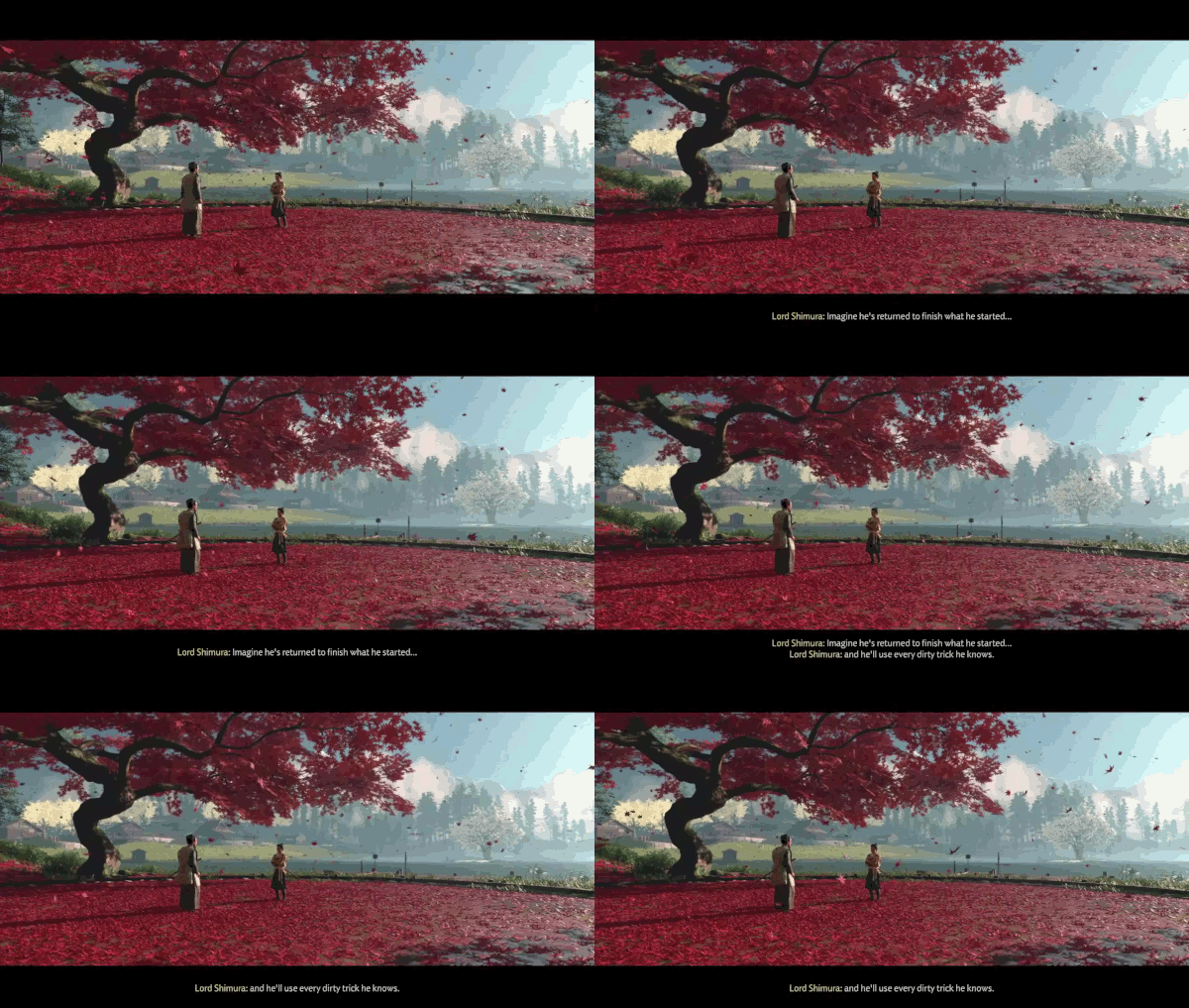
Two themes were written for Jin by Ilan Eshkeri– the first is his standard character theme, which is used more often for him as a whole (and can be found on many tracks throughout the Eshkeri portion of the album, but particularly in Jin Sakai), and the second is what I refer to as the Ghost theme (heard in many Eshkeri tracks as well but is better represented in the two The Way of the Ghost tracks), which seems to represent the many sacrifices of Jin’s journey, particularly regarding him sacrificing his honor and Samurai teachings to defeat the Mongols.
At last then, we arrive at the title sequence.
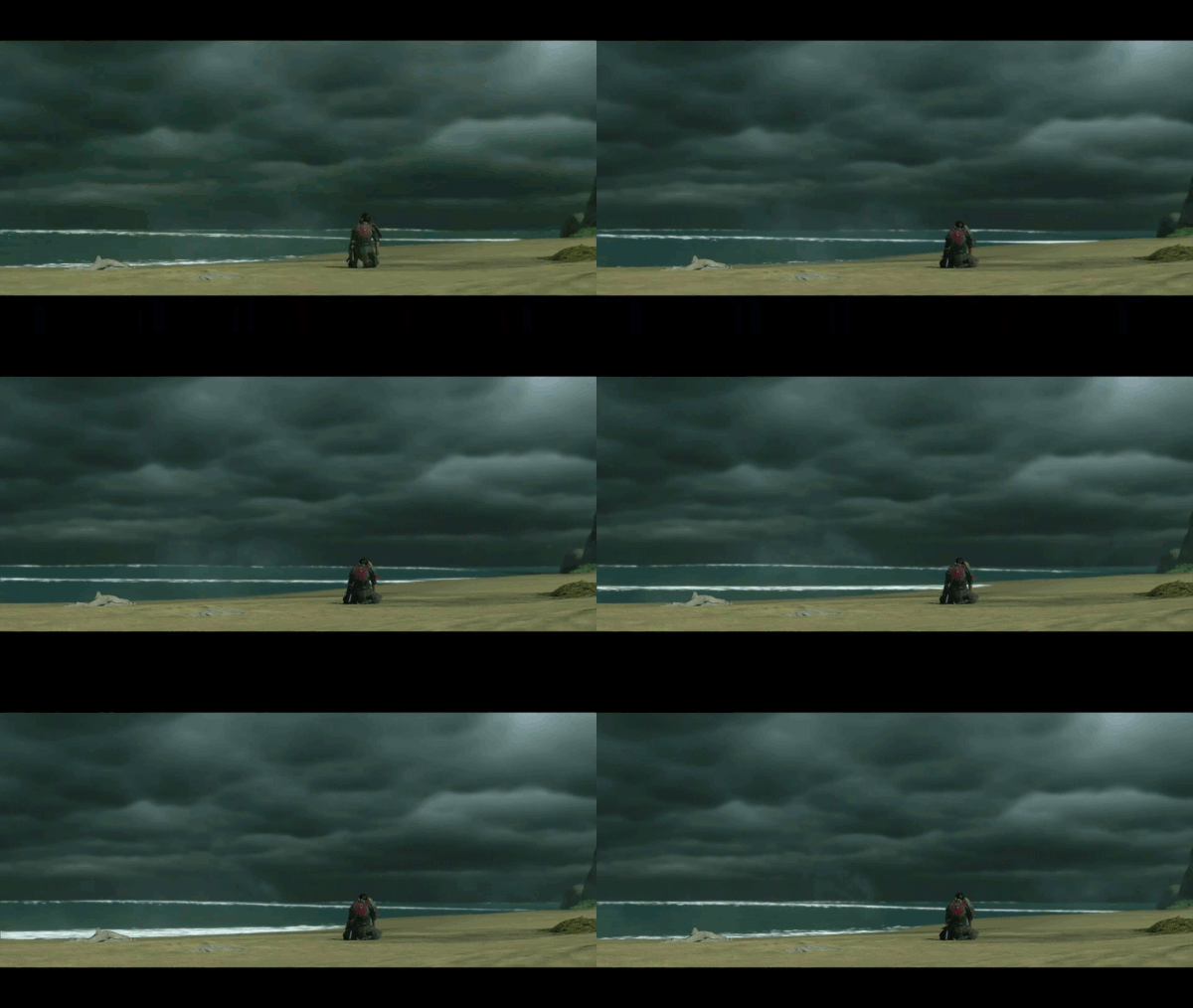
Jin wakes up on a beach after being thrown off a bridge by Khotun Khan. A defeated and fragile statement of Jin’s theme accompanies him as he asks for help from his dead father. He doesn’t feel strong enough to overcome this threat. The response comes in the form of the Guiding Wind, which leads him to Yuna. The two of them discuss the next course of action, to which Jin mentions recruiting the help from people that can help them. Yuna asks Jin for his help in rescuing her brother, who can also help him in his fight. While she goes off to find him, Jin rides on his own to begin his journey.
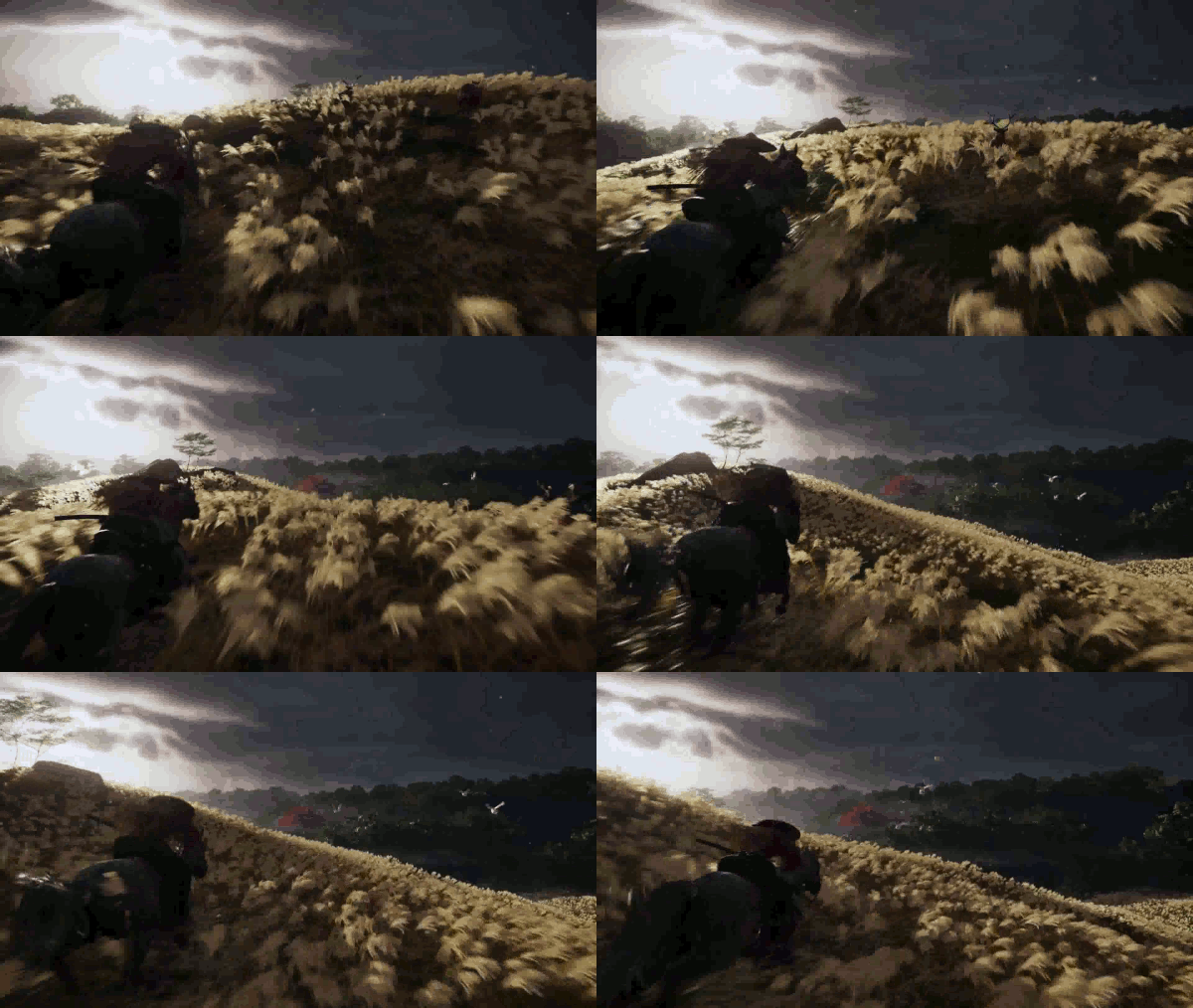
Jin rides through the woods of Tsushima in a cutscene scored by a variation of the Jin Sakai track, as we take in the breathtaking scenery that Sucker Punch created. The camera finally cuts to the over-the-shoulder view that’s ubiquitous to normal gameplay… but we’re not given control of Jin yet. Instead, the developers decide to build the moment for us– they give us the over-the-shoulder camera and the ability to move it knowing that we’re expecting to control the character, but instead the character moves on his own to the beat of the driving score. The music rises and rises as Jin approaches a pampas grass field, until it reaches a fever pitch. The control of Jin is returned to the player as he reaches the field, after which the aspect ratio switches back from the cutscene 2.35:1 to the gameplay 16:9 and the music launches into a massive statement of Jin’s theme.
After that, the music dies down to a solo Japanese flute, and you’re free to explore the open world of Ghost of Tsushima.
There’s nothing I can say that will do justice to how magically powerful that moment is. But I’ll begin by saying that that’s a masterful use of interactivity and music to shed a new light on an age-old storytelling tool.
The reason for why this moment works ultimately comes down to that, interactivity and music, alongside a sensible understanding of how to return agency back to the players.
As I’ve already explained above, the prologue functions very much like a tutorial where the developers teach the players how to navigate their open-world before throwing them into it. And given that a player will spend approximately an hour being told what to do and how to do it (effectively, the opposite of how an open-world game works), the developers crafted the title sequence as a statement to the players– Welcome to Ghost of Tsushima, now you’re free to explore.
The music takes on multiple roles as it almost serves as the connective tissue between the mechanic and narrative purposes of this sequence. On more traditional terms, the music helps accomplish what any good title sequence should do, which is to set the tone and get audiences excited for the story about to unfold. Narratively, Jin’s theme being stated in its full glory represents the beginning of his journey. It’s important for the theme to be in the players’ heads, because it, alongside the Ghost theme, will be a big part of the journey moving forward.
Its role as game music is to help sell the visceral thrill of being thrown into an expansive open world that’s yours to explore as you see fit– the statement of Jin’s theme landing as the player is given control of the character and acquires full agency over the game is a completely conscious design choice, one meant to amplify the aforementioned statement from the developers. The entire sequence hinges on that single transition from cutscene to gameplay, and so it has to land near perfectly, hence why everything, music included, is timed to it.
It would be disingenuous of me to say with complete confidence that Eshkeri wrote this cue with this particular moment in mind. The truth is that game development is much more complex than this, and often, particularly in AAA development, composers don’t get to score every single moment of the game to screen. Whichever was the case, the result is marvelous, because the music is absolutely perfect for that moment, and instantly sells the game as one to truly pay attention and keep playing. The game that follows this is well worth the time.
You probably might be thinking that it’s weird that I spent an equal amount of time talking about game design as I did music in a blog dedicated to game music, but the truth is that this is one of those magical moments in which everything, music, sound design, mechanics and visuals come together to create something powerful and significant. To properly explain why the use of music in this particular moment of Ghost of Tsushima works so well, one needs to understand the context in which it’s used and the purpose for which it’s used, and that includes talking about game design. They are so inextricably tied to achieve this level of success and, at the end of the day, that’s what great game development is– the synergy of the many elements that comprise a video game in service of creating a great experience for the player.
GHOST OF TSUSHIMA
Music by Ilan Eshkeri & Shigeru Umebayashi
Head of PlayStation Music: Chuck Doud
Score produced by Peter Scaturro & Keith Leary
Additional music by Chad Cannon & Bill Hemstapat
Orchestrations by Chad Cannon, Ilan Eshkeri, Jessica Dannheisser & Peter Bateman
Additional arrangements by Marli Wren
Recorded by Stephen McLaughlin, Jake Jackson, Toru Okitsu, Mary Shinohara, Kellogg Boynton, Nick Spezia & Marli Wren
Mixed by Stephen McLaughlin & Kellogg Boynton
 Game Music Hub