

From what I could gather, 2021 for game music was in many ways like how 2021 was for games in general. By the end of 2020, the conversation about Game of the Year was overwhelmingly dominated by a handful of games, whereas this time it feels like opinions are far more spread out (though this doesn’t mean that the games released last year are worse for it). Equally for music, I saw a lot of consensus among what people thought were their favorite game scores between Hades, DOOM Eternal, Ghost of Tsushima, Ori and the Will of the Wisps, Final Fantasy VII Remake and Spider-Man: Miles Morales; in 2021, though, it felt like the conversations were far more spread out across many more games which, don’t get me wrong, is a wonderful thing. It just means that everyone’s lists are going to be more different than usual, including mine.
This is Game Music Hub’s very first year-end list, which is hard to believe. We’ve made it to 2022 still going strong (our first anniversary is coming up this March!), and I’m excited to talk about some of my favorite game music from last year.
Not that I have any authority to say which is the best score of the year anyway, but my initial plan for this was to rank the ten selections before I quickly realized that I didn’t want to. The older I become the weirder I get about looking at films or shows or games or music as a competition for the greatest of the year, which has made me look at award ceremonies and Top lists more as opportunities to celebrate the stuff being mentioned rather than as arbitrary contests of excellence.
That made the goal of this article very clear to me: I want to celebrate and recommend and talk and gush about all of these scores because I want other people to experience them, and a part of me feels like introducing rankings immediately turns the conversation into which of them is better. Since ordering them in alphabetical order would’ve piled a lot of the longer write-ups together, I instead decided to arrange them in a way that made the text flow better.
So, without further ado, I present… 10 of my favorite game scores of 2021.
Call of Duty: Vanguard
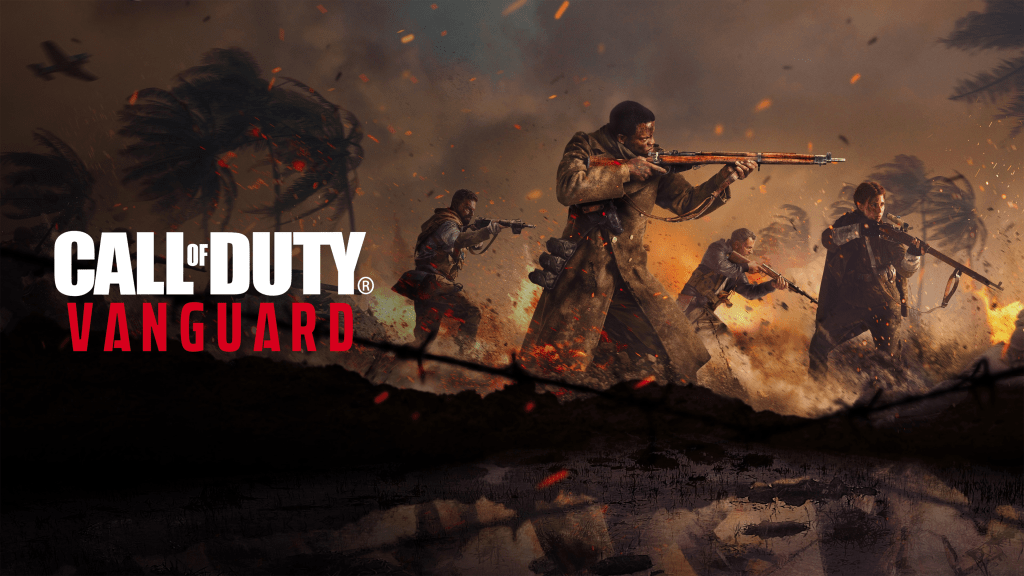
MUSIC BY BEAR McCREARY
Bear McCreary has been having a hell of a year. Call of Duty: Vanguard may be his only video game title in 2021, but that’s just a fraction of the work he’s accomplished across the three main mediums. TV shows like Foundation, Masters of the Universe: Revelation, See and The Walking Dead (and that’s not counting Outlander, which skipped a year due to the pandemic), and the indie film This Game’s Called Murder round up his 2021. Huge range of styles across all of those scores.
To be completely honest, I was a bit skeptical when this score was initially announced (just my own wariness towards AAA buzzword talk), but that was quickly dissipated when I got to listen to the score and then play some of the game. Vanguard is a propulsive and rich score that complements the gameplay really well. Not only that, but McCreary finds clever but subtle ways to branch out the instrumental palette of the music to make each of the four protagonists of the campaign musically distinctive.
 Each of these main characters is represented by a melodic and/or instrumental idea. Polina Petrova is represented by the sound of a solo violin performed by the virtuosic Sandy Cameron, as well as two distinctive melodies (you can hear them both during Polina’s Vengeance on the album). By contrast, Arthur Kingsley is represented by the cello. Lucas Riggs’s more playful attitude is neatly complimented by the electric bass and a propulsive, rhythmic motif. Finally, Wade Jackson gets a Hans Zimmer-esque swashbuckling fanfare often quoted by the French horns. The main theme itself (heard in the album opener Vanguard) is pretty great as well.
The entire score actually sounds like McCreary’s voice filtered through Zimmer’s signature style (just listen to tracks like Into the Lion’s Den, Pacific Heat or Shrapnel), which makes for a very powerful combo. It’s a great fit for the action-packed campaign and I can’t recommend it enough on the album.
Call of Duty: Vanguard is available on major streaming services.
Death’s Door

MUSIC BY DAVID FENN
Hearing a score by someone I know nothing about is always exciting. Listening to something without the expectations or preconceived notions that a renowned name carries is refreshing because there is freedom in knowing that your thoughts on what you heard aren’t based on anything other than what the music is.
Death’s Door was recommended by a friend months ago, the only reference being that the music by composer David Fenn was nice (he was also producer, game/level designer and sound designer for the game). That left me completely unprepared for how lovely I found the score to be, filled with many moments of gorgeous atmosphere, exciting action and charming melodies.
 Its sound has a lot in common with the works of Gareth Coker and Christopher Larkin, aiming for that style of pensive, relaxing atmosphere, as evidenced by tracks from the album like Estate of the Urn Witch, Secrets or Castle Lockstone, which are usually spearheaded by woodwinds and piano. Most of the action music, like in Ori and Hollow Knight, is intense and energetic without straying far from the established sound, but those times when it does, it’s amazing. My favorites are probably the stylish Grandma and the frantic King of the Swamp (the sudden shift to hip-hop production is a lot of fun, as are those furious runs up-and-down from the strings).
Even with those points of reference, Fenn does his own thing with that familiar sound, clearly distinguishing it from the aforementioned works. Death’s Door is the first score I ever heard of David Fenn, and now that I’ve listened to some of his other scores, I’m glad that I took a chance with him. I think he does really lovely work and will gladly pay attention for scores of his in the future.
Death’s Door is available to buy on Bandcamp and to stream on major services.
Ratchet & Clank: Rift Apart
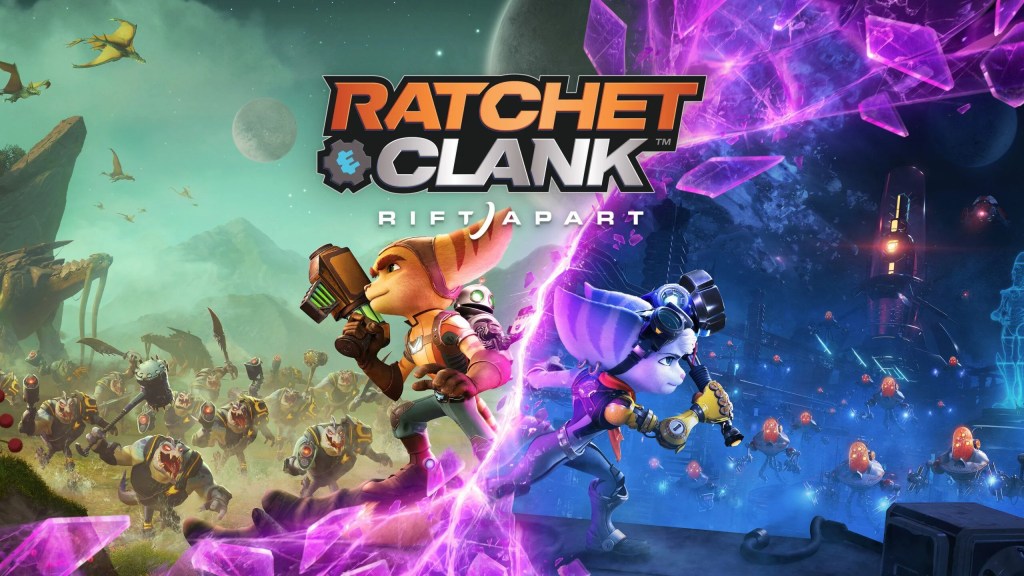
MUSIC BY MARK MOTHERSBAUGH & WATARU HOKOYAMA
How is having THE Mark Mothersbaugh write the score for a Ratchet & Clank game a combo that took 19 years to happen?! They’re both perfect for each other, and Rift Apart, written by Mothersbaugh and Wataru Hokoyama, fully takes advantage of the composer’s wacky style.
The music is a vibrant extravaganza of orchestra and the signature synths from Mothersbaugh’s Devo days. It’s a hoot, the kind of fun that you just have to hear to believe it. It’s underpinned by a handful of thematic identities for the major characters, most importantly the heroic main theme for Ratchet and Clank (presented in the opening track from the album), as well as a motif for the evil Doctor Nefarious.
 Most of the music scores the ambitious setpieces of the game or accompanying the rich and absorbing settings of the game. Highlights include Festival of Heroes featuring a fabulous brass motif and swashbuckling fanfares, the off-kilter synthwork in Sweet Home Sargasso, the swagger of the disco-styled Cascading Entropic Fissure, the driving synth/orchestra hybrid A Tale of Two Cordelions and even the charmingly obnoxious Join Me at the Top, performed by Nefarious’s voice actor Robin Atkin Downs. My personal favorite of these is the breathtaking Blizar Prime’d and Ready, which pits a motif on rampaging strings and grandiose orchestral phrases against cascading synths and a fabulous drum groove.
Holy hell is this music fun. I feel like I can’t stress that enough. Even just writing about it and having the music in my head makes me smile so much. I wish I owned a PS5 so I could experience the score in context (not for the music alone, I really like the Ratchet & Clank franchise). Just on the album, though, it’s one of the best experiences I’ve had listening to a score in 2021.
Ratcher & Clank: Rift Apart is available on major streaming services.
Chicory: A Colorful Tale
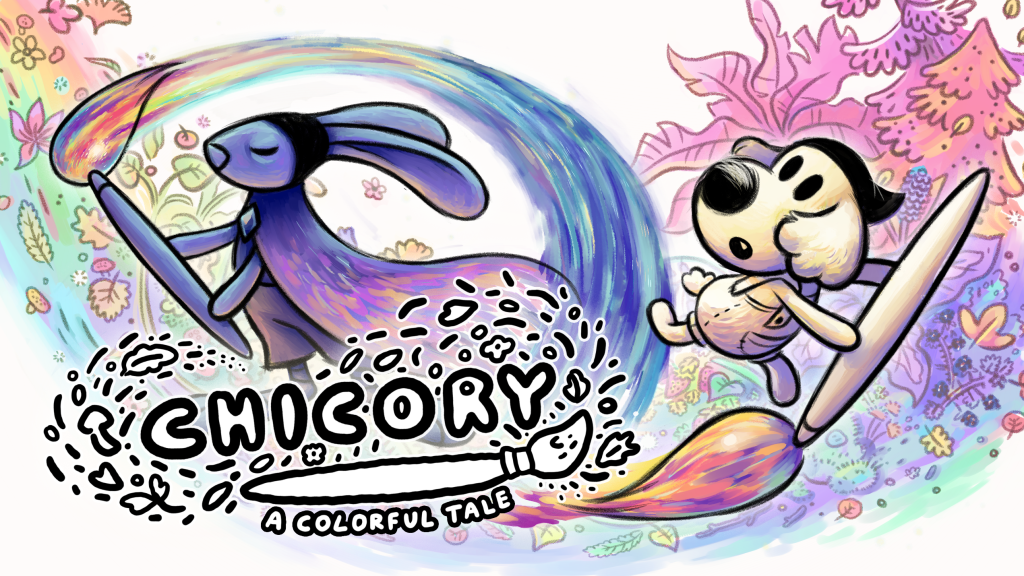
MUSIC BY LENA RAINE
To be fully honest with you, I wasn’t sure which of the two major Lena Raine scores to cover on this list. On one hand, every major outlet that features a score of hers in their Top lists is choosing Chicory, leaving me with the desire to spotlight the severely underrated Moonglow Bay; on the other, Chicory is just such a great score. All the love that it’s been receiving is fully deserved, and there is so much I could talk about that I don’t want to leave unsaid.
So I will do the expected thing and talk about Chicory… but first let me spend a paragraph on Moonglow Bay because it also deserves it. The wholesome, cozy vibes of this small fishing town brought me so much joy, and Raine’s score was the perfect accompaniment. Her music for the game is meditative, far less concerned with being energetic and colorful than just creating a relaxed atmosphere that doesn’t draw too much attention to itself. She still brings lots of great tunes, because that theme is pretty great, as are tracks like The Cozy Cavern, Rainy Beats To Fish/Shop To, Marina’s Aquarium and Opening Shepherd’s Gate. I fully recommend checking this one out.
So, then, Chicory: A Colorful Tale. The best way I can lead with this is that Raine’s penchant for creating quirky, fully realized musical worlds is on full display here. The score’s sound is fresh, vibrant and detailed, courtesy of all of the performers involved (including woodwind extraordinaire Kristin Naigus). The themes that she writes for the characters are gorgeous and heartfelt. The narrative that she creates with those themes is tightly woven and complex.
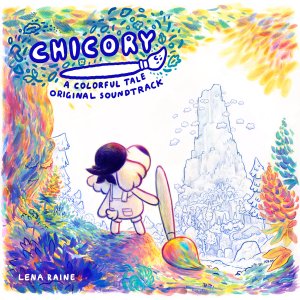 There are so many details to unpack here. One thing I love about thematic narratives in music is when themes share connections with each other that aren’t readily apparent. This is where Chicory is the most interesting for me, like how the theme for the protagonist, Pizza (the one most prominently featured in The Town of Luncheon from the album) shares its opening notes with Chicory’s theme (the one from, you know, Chicory’s Theme), or how certain area motifs start out as variations from these two themes. It’s another form of showing character relationships through music in a way that’s more subtle than using counterpoint or just instrumentation changes, but can be very rewarding to put together. And then, of course, plenty of tracks also intertwine the themes with counterpoint, or quote themes with different instrumentation to signal changes and evolutions.
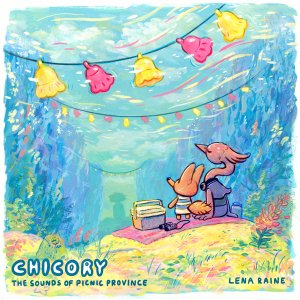 With details like these, Raine builds a complicated narrative that blows your socks off. And even if you don’t get these tiny details in the music, there’s still so much more to love here. Have I introduced you to the catchiest melody I heard in 2021? Well, go no further than the saxophone-led Dinners, The Big City. The moment that blew my mind because I didn’t think the score was going to go there? Eyes in the Darkness (which I don’t want to spoil along with all the fabulous boss music that is interactive music at its most powerful). A powerhouse of a climax that left me both emotionally shaken and breathless? History Against Us all the way to The Mountain Top.
For your listening pleasure, Raine created two albums with her score. The first one is the standard Original Soundtrack, covering most of the music in the game. The second one, titled The Sounds of Picnic Province, was conceived as a more relaxed, low-key standalone experience, remixing a portion of the score to resemble some of the stripped-down versions of certain tracks that play over some in-between areas of the game. I also made a custom playlist for it earlier last year, if you don’t mind me cheekily plugging it. But really, both albums are an absolute pleasure, and if you do take a chance with it, I highly encourage you to read her detailed notes on the thematic intricacies behind the score; it was eye-opening for me.
There is so much life in this music, so much color, so much detail. You can feel the emotions of the story just through the music. The score played a crucial role in the way that this game impacted me and it just cements my impression that Lena Raine is a truly special composer. She’s just getting started, and I can’t wait to see where she goes next.
Both albums for Chicory are available to buy on Bandcamp here and here, and to stream on major services.
Ender Lilies: Quietus of the Knight
MUSIC BY MILI
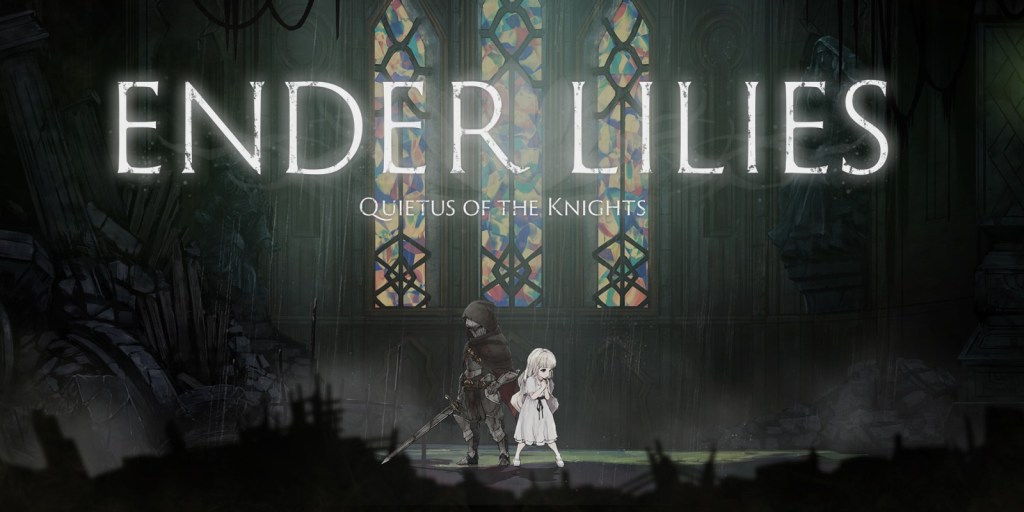
Ender Lilies is another game that I knew very little about before I started playing it. All I knew was a general sense of its artstyle, and that people who enjoyed Hollow Knight (a game I absolutely adored playing) were also having a fun time with this. Truthfully, it didn’t end up clicking with me and I dropped it three hours in, but I did like what I heard of the music a lot, which enticed me to listen to the album.
The score, performed by the group Mili and written by members Yamato Kasai and Cassie Wei, is melancholic, deeply sentimental and occasionally very powerful. It’s heavy on the piano and strings, conjuring gorgeous melodies and oozing with an atmosphere that is juxtaposed against the rotten, decayed Land’s End to great effect. The music often makes the loss and grief that permeates that world very palpable.
 This melancholic sound is captured very well by the main theme of the game, which is a delicate lament for piano, child-like vocals and strings. The sound is further explored on tracks like Harmonious and Bible from the soundtrack album. Other tracks like Bloom and Accolade introduce quasi-classical writing for violin and piano.
The action music, contained mostly within the Outro tracks, keeps with the same general style but with a bigger scope. My favorite of them is probably Rosary – Outro because of its tasteful incorporation of castanets and drum kit, which is a great pairing when combined with the more classical sounds of the piano and strings.
I keep coming back to the word ‘melancholy’ when thinking about this score, but honestly that’s about the best descriptor I can give it. Even at its darkest or most beautiful, Mili make sure that their music always comes back to that melancholy. That’s where its beauty comes from. Overall, Ender Lilies is a really well-made score that I haven’t really seen get as much traction as I would’ve liked. Hopefully I can at least get one or two readers to take a chance with it.
Ender Lilies: Quietus of the Knight is available to buy from Steam and to stream on major services.
Battlefield 2042
MUSIC BY HILDUR GUÐNADÓTTIR & SAM SLATER
It’s been very interesting to read and hear the discourse revolving around Hildur Guðnadóttir ever since she burst into the scene with her score for Chernobyl (though this by no means was her first work either as a composer or as a musician). On one side, film and TV buffs adored her music; on the other, she proved very divisive among fans of film music.
Contrary to most film scores being released, her music is fiendishly atmospheric, stark and almost entirely devoid of melody. That makes her an instant put-off for the most traditionalist score fans. I don’t have enough fingers to count the criticisms I’ve heard thrown her way around film music circles.
And yet, there’s something very special about her music that people connect to. Time and time again she’s proved to be a force to be reckoned with. You have to look no further than her historic Emmy/Oscar/Grammy/BAFTA wins over the last three years thanks to her work on Chernobyl and Joker.
I am a huge fan of her music and Battlefield 2042 is no different. She and Sam Slater (who has collaborated with her in both Chernobyl and Joker) have created a striking soundscape for the game that is equal parts entrancing and aggressive, always blurring the line between music and sound design.
This I think is why I find Guðnadóttir’s music so interesting to listen to. Despite using sound design as its instruments, BF2042 never devolves into aimless noise. Like I mentioned to someone a while ago, this isn’t just Guðnadóttir and Slater throwing cool sounds around for three minutes at a time. These are proper pieces of music that develop over the course of their runtime, where several sonic elements interact with each other and build towards something. Everything has a purpose here.
 Listen to the album opener Orbital, with the various rhythmic lines feeding off each other, weaving in and out of the increasingly busy explosions of sound, which build into portentous chords at 1:45, ultimately growing in intensity towards that moment at 2:26 where the detailed soundscape gives way to a slower section that closes out the track.
Even the quieter moments are interesting to me, like Tipping Points, which is basically just five minutes of low-key suspense. The way they carefully construct silences in between those giant bass chords, slowly building tension, or all of those high-pitched, alarm-like pulses hitting at exactly the right moments, or the way that the music seems to fizzle out at the end, almost like someone’s breath slowly leaving their body.
I guess the takeaway from this is how much musicality they manage to pull out of these sounds. This is clearly written by people who deeply understand music and are just looking at it from a completely different angle. And no, it isn’t terribly complex from a technical standpoint; if you’re looking for that, this is probably the wrong place. I don’t think Guðnadóttir or Slater are aiming for that.
The score in context is a bit hard to judge, given that BF2042 is a purely multiplayer game without single-player campaign. Music doesn’t play a big role in multiplayer FPSs given the necessary emphasis on in-game sounds for player orientation, leaving the score to play during menus and transitional moments in between the huge gameplay sections. For what it’s asked to do, it does a really good job; it complements the futuristic, post-apocalyptic setting of the game really well.
My liking the score so much has a lot more to do with how much I already like Guðnadóttir’s style of music and how much I enjoyed it on the album than about how it works in-game. I fully recognize that bias, especially when this article features so many scores that do wonders for their games. But still, I can’t deny the impact that Battlefield 2042 had on me and how much I still think of it. Hildur Guðnadóttir is just a very exciting composer, and her venture into games yielded an equally exciting score that I’m happy to keep playing for the foreseeable future.
Battlefield 2042 is available on major streaming services.
Psychonauts 2

MUSIC BY PETER McCONNELL
To call Peter McConnell a legend would be an understatement. He’s one of those composers that, even if you don’t know his name, you’ve certainly heard his music in at least one game you’ve played. During that very prolific era of LucasArts, he worked on a myriad of Star Wars and Monkey Island titles from the 90s. I know him as the guy from the absolute juggernaut of a score for Grim Fandango. He also wrote the score for the original Psychonauts back in the early 2000s, and is now back for the long-awaited sequel.
If I have to be honest with you, I don’t remember a whole lot from the original Psychonauts. That makes me excited to revisit it after how much I loved the second game’s music, which is a total joy from start to finish. It’s always so refreshing to hear a score completely unafraid to be silly and eclectic and just have a lot of fun being itself.
McConnell’s score is a combination of many different musical styles interwoven together over the course of the game. You might get the wrong impression from the first (and thus far only) volume released of the score, given its focus on the orchestral and jazz portions. There’s a lot more to it than that, like more suspenseful atmospheres, Romani-style tunes and even rock music. For the benefit of those who haven’t played the game and would like to check out the music, I will refer to the first volume only.
 There’s such an alluring atmosphere to tracks like Casino Hallway Sneak with those punchy, raspy trombones, muted trumpets, vibrant bass clarinet and groovy electric guitars or the free-style piano and sax accents in Here’s How It’s Done. Then, when it’s time to get more explosive, McConnell rips out showstoppers like Lady Luctopus and its snazzy rhythm section, over which he peppers passages for surging strings, dexterous woodwinds (another shout-out to Kristin Naigus!), roaring trumpets and energetic, dissonant runs for the piano. As I’m writing this I can’t get Casino Monorail out of my head, which is probably my favorite track of the album. The orchestral music, on the other hand, has an old-fashioned quality to it, harkening back to the feel of Saturday-morning serials and fitting in nicely with the swagger of the jazz portions (some tracks like Something Fishy at Headquarters even combine the two styles).
Overall, I’m really happy to hear a legend of game music at the top of his game, delivering a score of such caliber and confidence and inventiveness and sense of unpretentious fun. It’ll be interesting to revisit the original now and hear how that sound evolved in the seventeen years between the two.
Psychonauts 2 is available to buy on Skill Tree Records and to stream on major services.
Ruined King: A League of Legends Story
MUSIC BY GARETH COKER
Gareth Coker is another composer with whom I found myself having to choose between one of two major releases of his to mention here, the other one being Halo Infinite. And while Infinite is still a really great score that covers nearly all the bases for me as a long-time Halo fan, for him I chose to cover the relatively lesser-known Ruined King.
The game is a spin-off of a tiny indie property that is totally not making waves right now on Netflix called League of Legends, taking place in the same universe and sharing some of the same characters. I only got to play about two hours of the turn-based combat, so its inclusion here is based more on the impression that I got from both albums.
 Coker’s music for the game is unabashedly folk-ish, far more at home with the sounds of fiddles, mandolin, small percussion, hammered dulcimers and various non-orchestral woodwinds (should I be surprised to find Kristin Naigus in the credits?!). That doesn’t mean there isn’t a bigger scope to the music, but Coker always chooses the moments where to go big for better impact.
 As such, you get tracks with an intimate sound like The Queen of Bilgewater and Down on the Docks coupled with the explosive action of Deeplurker, Pushing Back the Terror and Rise Against Ruin.
The result is a very entertaining fantasy score that ticks a lot of boxes for me. If you like this, check out the equally great companion album Inns of Bilgewater, which is a collection of in-game jaunty tavern songs and further expands on the folk sound of the score.
Both albums for Ruined King are available on major streaming services.
Aliens: Fireteam Elite
MUSIC BY AUSTIN WINTORY
That Wintory guy makes cool music huh? I spent four weeks talking about some of his scores, so it’s only fitting that I’m back talking about him again.
Early in 2021, Cold Iron Studios, the developers of Aliens: Fireteam Elite (then simply named Aliens: Fireteam) sat down with IGN to promote it with a 25-minute gameplay demo. In it, they very nonchalantly said that they’d gotten Austin Wintory to score their game, which came as a complete shock to me. If you were to get someone to score a game from a franchise overflowing with some of the finest horror/action scoring in film history (courtesy of film music giants Jerry Goldsmith, James Horner and Elliot Goldenthal), it sure as hell should be Austin Wintory. So from that point, my interest in the game was piqued, though it would be quite a few months before either party made some form of an official announcement.
Fast-forward to December and me playing the game… and the score is everything I ever hoped it would be. To describe it as a cacophony of orchestral/synth violence sounds almost insulting, but that’s exactly what it is. Wintory whips out some of the most aggressive music he’s ever written with the most unusual instruments you can think of.
And yet, despite the music being so aggressive and violent, there is an elegance to it. He’s always had a really impressive knack for organized chaos in his writing, and this is no different. This score is layered and detailed and busy and complicated, but never incomprehensible. Wintory finds a way to make his music digestible and easy to follow, which is not unlike how Goldsmith or Horner or Goldenthal crafted their scores (as a side note, I love that Wintory brought back those two lonely woodwind gestures from Goldsmith’s score).
It’s hard to discuss this game in terms of individual pieces of music because of one unfortunate event… there is no album release for it. But I will talk about some of the moments in-game that stood out to me.
 There is a suite of combat music from the second campaign on his YouTube channel, which highlights the outstanding musical choices he made with the game. Giving the flute, performed by the virtuosic Sara Andon, such a major role in music this vicious is a thing that most composers wouldn’t do, if only because it’s so normally associated with sentimentality and tenderness, but it works here, giving the music an off-kilter feel coupled with the gnarly electronic ambiance, the droning of the Serpent (an actual wind instrument, not the animal, and one of the many ways he pays respect to Goldsmith’s score), the churning of the string ensemble and the strident rhythms from the snare drum (one of the most important components of Horner’s score).
My personal favorite is the music for the fourth campaign with those insane runs up and down the scale from the celli and elaborate writing for low woodwinds. By the time you get to the final portion of the campaign (and thus the game), my mind is utterly blown by the things that Wintory does with his music. The blasting of the woodwinds (did I mention Kristin Naigus also performed in this score?!), the chugging of the strings, those dark, delicious brass fanfares, the intricate synth production, the brass constantly playing off the strings in a sort of call-and-response fashion. It doesn’t get much better than this.
In-game, hearing the music flow in and out of combat with elegance and responsiveness was a real treat, always having the right sense of momentum and dramatic flow. In games like this where the combat can either be lengthy or very start-and-stop, music can be a deal-breaker because of the natural tendency to trigger music any time a player engages an enemy, regardless of the amount of time that it may take a player to defeat said enemy based on how hard it is or how many of them there are, which lends itself very easily to the score behaving awkwardly, like stopping almost as soon as it starts, only to hear it start again ten seconds later when it comes to spaced out small encounters. Music just doesn’t work like that.
Fireteam Elite thoughtfully doesn’t trigger music for every encounter. If it’s a very small group of Xenomorphs, all there is is silence, but as the encounters grow larger and more dangerous, combat music is triggered and then evolves in accordance to the intensity of the fight, more intense cues for bigger encounters and less intense cues for smaller ones. Then when an encounter is over, the game transitions the combat music into cooldown cues that slow down the intensity without pumping the brakes entirely so that, if more Xenos arrive, combat music can seamlessly start again, and if not, the score can transition to silence. Smaller but satisfying details come in the form of additional instrumental layers that can be added or subtracted to better complement the flow of combat, or that neat cello stinger that plays when you get a headshot but only if music is already playing.
Austin Wintory knows his shit, and Aliens: Fireteam Elite is just more proof that he’s one of the most exciting composers working in games. It’s a huge shame about the album, even if I know that they’re probably hard at work getting this released for us. It would be a real treat getting to hear every bit of the details that Wintory snuck into the music, and just plainly getting to hear some of the finest action scoring I’ve heard in a video game in 2021.
But in the meantime, I am happy to keep waiting.
Far Cry 6
MUSIC BY GABYLONIA, HILARIO DURÁN, ARIEL CONTRERAS-ESQUIVEL & PORFI BALOA; AUDIO DIRECTOR: EDUARDO VAISMAN
This is going to be a departure from the rest of the music on this list because I’m not going to be talking about a score necessarily (though the score itself by Pedro Bromfman is pretty solid).
When Ubisoft announced that their upcoming Far Cry 6 was going to take place in a fictional Latin-American country, I was curious but wary. Curious because any opportunity for underrepresented stories is always a welcome one. Wary because Latinos have historically been portrayed by non-Latinos as little more than an uncivilized people coming from drug-fueled hellholes.
About a month before the game was released the developers posted a YouTube video where they discussed their approach to music, and that’s when I really got interested. Their Audio Director, Eduardo Vaisman, spoke about how they approached Latino musicians and composers to have them write and perform in-game music that the characters would be listening to on the radio, hearing performed live or over the speeches by dictator Antón Castillo alongside pre-existing licensed music.
All of this in-game music (and some of the properly licensed songs) is recopilated into the album The Music of Yara. The range of style in this is as vast as you expect Latino music to be. Everything from rap, reggaeton, bachata, bolero, cha-cha-chá, danzón, cumbia, salsa and military marches.
The lyrics from the songs are all related in some way to the political climate of Yara, with songs like Camino Revolucionario by Gabylonia or Sueños de Libertad by Porfi Baloa tackling the idea of revolution and fighting for the people from two completely different musical styles. Some others, like La Bella Ciao de Libertad and Mambo Yarano are unabashed mockery of fascists regimes (both are covers of popular Italian songs, with La Bella Ciao de Libertad adapted by Navid Khavani and Vaisman from the popular Italian antifascism hymn).
 The idea of me choosing to spotlight this album might seem baffling until you understand that I grew up surrounded by all of the musical genres covered in The Music of Yara. Camino Revolucionario brought me back to the neighborhood where I grew up, with kids gathering around and freestyle rapping every afternoon. Every Friday the city used to host a dance at the main plaza and people would enjoy themselves with an evening of danzones, salsas, cumbias and boleros; Yara Para Todos and Bajo el sol de Yara by Hilario Durán could’ve easily been played there. The politically-charged lyrics remind me of the rapping trio that performs every week at the arthouse cinema I frequent nowadays. Reggaeton is a massively popular genre around the world. And even if I didn’t grow up with military marches like Argentinians or Venezuelans did, I have enough context from meeting people who did to know the weight that they carry, both politically and psychologically.
To see all of that so deliberately and carefully portrayed by a AAA studio on a flagship game franchise is extremely inspiring. This is such a loving celebration of the Latino condition, both the good and the bad encapsulated in a single musical experience. Even while pulling from many places and cultures, it ends up painting a pretty unified and well-rounded picture of the oppressed island of Yara and its struggles but also their beliefs and traditions; the music is just as much world-building as the character backstories and art direction. Massive, massive respect to Ubisoft Toronto and Eduardo Vaisman for championing this endeavor. I realize that this may not be to everyone’s taste (certainly not for those looking for a proper game score), but at least for me, it’s something worth being celebrated.
The Music of Yara is available on major streaming services.
 Game Music Hub