
UPDATE, May 6th, 2022: Clarified details on Rika Muranaka’s biography.
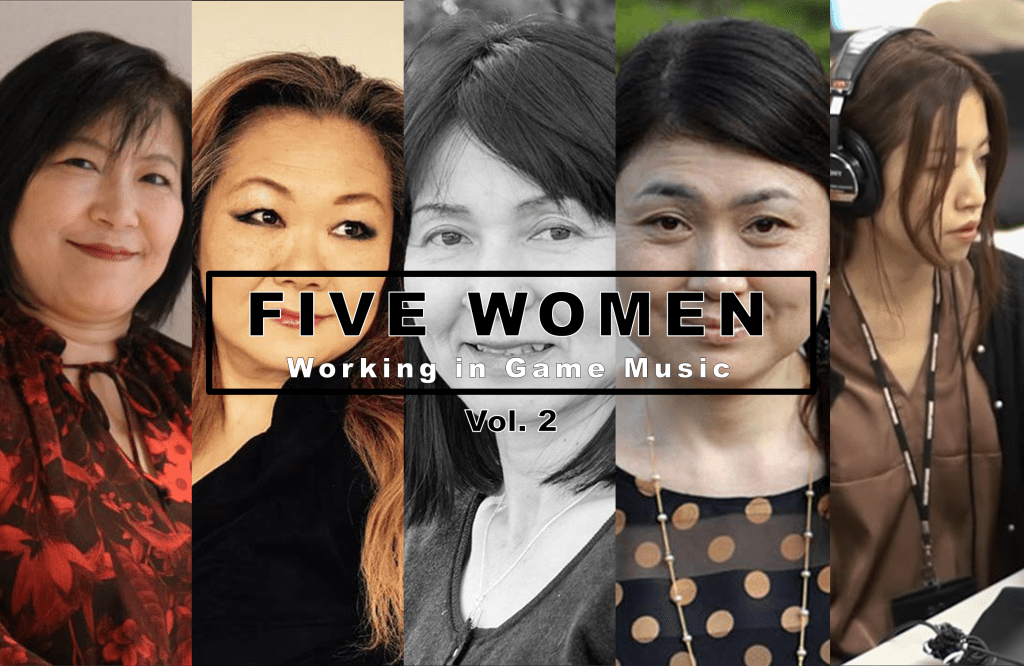
A year ago, just a week after this website opened its doors for the first time, I published an article spotlighting the careers of five women working in game music. I concentrated on composers mostly working in the West, and in it, I mentioned that I wanted to dedicate its own article to composers from Asia given how vast the gaming landscape is on that side of the world. Now, a year and some days later, here we are, doing just that.
I intend to turn Five Women Working in Game Music into an ongoing series moving forward. Now that these first two articles have touched upon some of the bigger names, I want to shed a light on lesser known composers, but also arrangers, orchestrators and musicians around the world making game music.
It remains to be seen how often I’ll do more of these, but at the very least, it’ll be a yearly series coinciding with International Women’s Day, so expect one every March 8th for as long as Game Music Hub is active.
As someone who didn’t grow up with Nintendo consoles like many of my peers did, I wasn’t well exposed to the breadth and scope of the Eastern game industry until much later in my life, and even then I still have glaring blind spots in my knowledge. The same thing applies for game music.
Asia has always been a tough market for game scores. Japanese companies tend to handle album releases for their scores differently than they do in the West. Nintendo notoriously keeps a lot of things to itself, and mostly doesn’t do digital soundtracks. Other companies like Bandai Namco, Konami, Square Enix or Capcom, while not doing as terribly, still have a long way to go in terms of the accessibility of their game soundtracks.
Unlike last year’s piece, you will not read about where you can find each score I mention because, except for the most recent ones, I wouldn’t know where to direct you, except towards bootleg albums on YouTube. A recurring thread among the composers on this list is how freaking hard it is to find their scores through legal means, and that’s an issue.
But that is a different conversation that I shouldn’t derail here.
There are many other things that these five composers share– they are, in their own ways, deeply influential figures, some of them forever changed the game music landscape in unforeseen ways. All of them have worked on greatly celebrated games and their music is constantly referenced as some of the finest music that games have to offer. All of them are massively talented and capable of writing very creative, and even challenging, scores.
Without further ado, let’s talk about each of them.
Minako Hamano

Minako Hamano’s name is one that has often gone obscured in favor of other composers. One constant that came up during research for this was that not a lot of people know her in comparison to her co-composers, even among fans of the Metroid and Zelda franchises.
Hamano’s debut title was The Legend of Zelda: Link’s Awakening, which is quite a debut for any composer, particularly when one considers that she wrote the music for that in her early twenties (!). She was actually twenty-four by the time that she started working on Super Metroid.
Metroid in particular is the franchise where she made her biggest stamp, working on most of the major titles since then in different capacities, like writing music for Super Metroid or Metroid Fusion to working on the audio for the recently-released Metroid Dread.
Her music for Super Metroid is deeply atmospheric, far more concerned with creating a very specific mood and feel rather than dazzling you with catchy tunes or riffs. That’s not to say that’s all she does, because when the game asks her to go big, she goes big in her own way.
It’s tough to say how her specific stylings carried over into subsequent titles, partially because there were never any album releases for any of those games, and thus we never got to learn which composer worked on what on any specific game.
All I can do is guess work, and it’s a shame, because I would love to give credit where credit is due, particularly with a composer that’s not often mentioned in conversations about female game composers and instead remains under the shadow of her far more public collaborators.
Yuka Kitamura

One of the most celebrated aspects of FromSoftware games has always been their music, which end up so ingrained into the experience of the games that fans are constantly referencing the music years after the game comes out. Yuka Kitamura has been a core component of that musical experience since Dark Souls II, where she was co-composer with Motoi Sakuraba.
And while that was the first Souls game she wrote music for, her first title with FromSoftware as a whole was actually Armored Core: Verdict Day, with Kota Hoshimo as co-composer. I know very little about either score or game since both are unavailable as of today.
After Dark Souls II, she has written music for every major game from the company, being part of the larger team of composers that worked on Bloodborne, again co-writing the score for Dark Souls III with Motoi Sakuraba, and then finally being lead composer on Sekiro: Shadows Die Twice and now Elden Ring.
To be completely honest with you, I have my misgivings about how FromSoftware implements their scores, and how little advantage they take of the core gameplay loop of the games. And to be fair, clearly I’m in the minority with this. In fact, it’s a huge testament to the quality of the music that Kitamura and other composers have written that I really like the music in the games in spite of the bare-bones implementation they often have.
My favorite work from Kitamura comes from her contributions to Bloodborne. The game starts as a delicious journey through a Victorian Gothic world, but slowly reveals itself as being intrinsically rooted in cosmic horror.
Her tracks Rom, the Vacuous Spider and Ebrietas, Daughter of the Cosmos are featured in the fights with their respective bosses, and they’re astonishing pieces of music. Both are powerhouses for choir and orchestra, but not in the way that you’d expect.
Where other composers leaned into explosive action music, full of rampaging strings, huge brass fanfares and soaring choral lines, Kitamura comes at it from a completely different angle. Her music relishes in dissonance; instead of those soaring, tonal melodies from the choir, the singers are a bed of deeply dissonant chords, the bigger orchestral sound popping in as accents here and there (love the almost-improvisational writing for timpani in Rom, the Vacuous Spider) and, most unsettling of all, the whisper vocalizations slithering about throughout the track. Hers is horror music.
To me, her tracks are the epitome of the Bloodborne experience. When I think of that game, I think of her music, and how well it captures the unspeakable horrors at the heart of it.
While I haven’t played Elden Ring, I did get to play that closed network test FromSoftware did at the end of last year. What I heard from the music there was promising, so I’m looking forward to digging into that whenever I get to the game.
Rika Muranaka
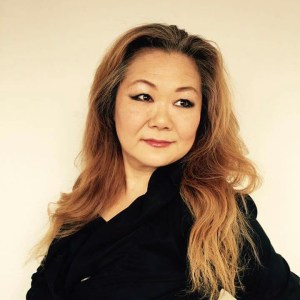
Rika Muranaka is another name that flies a lot more under the radar among larger conversations of game music. And granted, her work in games was not so much of a composer, but she was instrumental in a shift that forever changed the way that AAA developers in the West approach music.
Rika Muranaka had her start in games with Konami back in the late 90s, when she was brought in to write songs for titles like Castlevania: Symphony of the Night, Silent Hill and Metal Gear Solid. Her work on the latter game got her acquainted with Hideo Kojima and led to a fruitful working relationship that would last until Metal Gear Solid V in 2015.
Her role, which started as a songwriter, would eventually be expanded to that of a producer of the scores for the Metal Gear Solid series, being in charge of gauging how much music the composers working on the games would need to write and the manner in which they should be written to account for interactivity, as well as budgetary decisions, booking of musicians, among a large etcetera.
If you know the songs Esperándote and The Best is Yet to Come, then I don’t need to tell you how great they are. My latino heart has a huge soft spot for the tango-inspired Esperándote from the first Silent Hill, but The Best is Yet to Come playing over Metal Gear Solid’s credits is such a powerful way to cap-off the game and it greatly benefits the story that came before it.
However, Rika Muranaka’s stamp in gaming extends far beyond her compositions. In a move virtually unprecedented in the industry up to that point, Muranaka brought in film composer Harry Gregson-Williams, then part of Hans Zimmer’s gigantic Media Ventures group (which is now called Remote Control Productions), to work on the score for Metal Gear Solid 2: Sons of Liberty. The shadow of the game’s influence looms large over how Western developers make their games to this day; this is true with its music as well.
The game opened the floodgates for Western developers in the AAA sphere to start asking film composers to come work on their games, an approach that has resulted in scores like, among many, many others, The Last of Us, Assassin’s Creed III, Gears of War 2, Uncharted 4: A Thief’s End, Marvel’s Spider-Man, Ghost of Tsushima and several titles from the Far Cry, Call of Duty and Medal of Honor franchises (the latter two, ironically, started out having scores by the one composer who successfully managed to transition from games to film). Gregson-Williams himself would continue to work on every Metal Gear Solid game released since.
This approach has proven divisive, particularly among the game audio community, from those who say that it’s creatively healthy to bring people from outside the bubble to challenge the conventions of the medium, to those who say that composers who’ve built their careers in games are getting short-changed in favor of people who may or may not know, or care to know, about the medium.
Wherever your opinion lies on the spectrum, it’s clear that the approach is here to stay, and you can trace the history of that practice all the way back to Rika Muranaka’s initiative for Metal Gear Solid 2. Clearly, she was onto something.
Yoko Shimomura
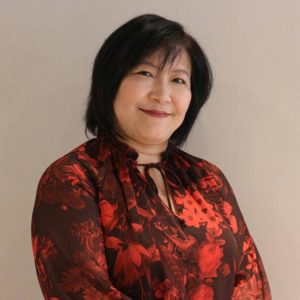
If you’re a fan of Kingdom Hearts, you probably know who Yoko Shimomura is. She’s worked on virtually every major entry in the series, including the latest Kingdom Hearts III, released three years ago.
Shimomura got her start in video games working under Capcom, with her first score for the company being Final Fight and going on to score for such titles as Code Name: Viper, The King of Dragons and, most notably, Street Fighter II: The World Warrior.
After Capcom, Shimomura joined Square, where she stayed as a staff composer until the release of the first Kingdom Hearts in 2002. During her tenure there, she worked on games like Super Mario RPG, Legend of Mana and Parasite Eve (possibly my favorite score of hers).
Even after leaving Square and starting a freelance career, she continues to work with the company and the developers there to this day. I’ve already mentioned she’s worked on nearly every major Kingdom Hearts game, but she’s also contributed music for things like the sequels Heroes of Mana, The 3rd Birthday and Final Fantasy XV.
The Kingdom Hearts scores jump around a lot of different musical genres but, at their heart, are deeply sentimental orchestral affairs. You have to look no further than the title track Dearly Beloved, a simple but touching piece for piano and strings.
They’re also unabashedly adventurous and exciting and care-free and entrancing. Like the games themselves, they’re so many things at once. It’s very impressive to listen to the effortlessness with which Shimomura shifts gears as the games constantly require wildly different things from the music. And that’s even without getting into the themes she’s occasionally incorporated into her scores from Disney and Final Fantasy properties over the years. My favorite of the bunch, even with the caveat that I’m not that familiar with all of them, is Kingdom Hearts II, so if you have a chance to check any of them out, I highly recommend that one.
Michiru Yamane

Michiru Yamane was another composer who got her start at Konami. Before getting the job on the franchise that she’s more well-known for, she worked on smaller arcade games, with her first as lead composer being Ganbare Goemon 2.
By the time that she landed Castlevania: Bloodlines, the franchise had amassed a whopping ten games. While it wasn’t quite the Castlevania that many of us loved and enjoyed, it was already popular. Yamane faced a lot of pressure to live up to the work that other composers had already laid out in previous entries which, in retrospect, is ironic, given how revered her music for the games ended up being, much more so than other scores in the franchise.
Even with the limitations of the sound chip, Yamane’s musical style in Bloodlines comes out as strongly classical, particularly in comparison to the more rock-oriented scores for previous games in the series. And while that was an approximation of what the franchise used to sound like in combination with Yamane’s personality, it was Symphony of the Night where Yamane truly flourishes.
The music for that game emerges as a powerhouse of opulent orchestral and choral writing combined with elements of power metal, jazz and even techno-pop. It certainly helped that the PS1 allowed the music to be performed by higher-end samples, even if, by today’s standards, it doesn’t sound that well.
I’ve only played Symphony of the Night once (and I don’t think I ever finished it), but I have a lot of the music seared in my brain because I used to listen to many of the tracks on repeat years ago. Moonlight Nocturne, Dracula’s Castle, Wood Carving Partita, Tragic Prince… you name it. The level of sophistication in the writing was mind-blowing to me and, like many older game scores, has only gotten better with age due to me finally understanding just how much composers managed to accomplish with so many limitations put upon them.
Michiru Yamane continues to be a very active composer and musician after her tenure at Konami. Most recently, she has contributed to the Bloodstained series of games developed by former Castlevania producer Koji Igarashi and intended as a spiritual successor to Symphony of the Night. Another game for which she’s written music recently is the platformer Monster Boy and the Cursed Kingdom, where she shares credit with a handful of other composers, including Motoi Sakuraba (of Dark Souls fame) and Yuzo Koshiro (of Streets of Rage fame).
 Game Music Hub
Great article Andrés, really enjoyed reading it! Particularly the information about Rika Muranaka was new to me – I was only familiar with her role as singer and song-writer, so hearing how she actually changed the industry was quite eye-opening. Great choice to focus on Japan for this instalment in your series – for some reason, historically there have been far more female game music composers in Japan than in the West. Another obvious candidate would be Yoko Kanno, who started her career in game music before switching to film and TV scoring a decade later and who was an absolute pioneer of live-orchestral game music through her Nobunaga’s Ambition scores.
To address one detail that appears a few times in the article (and to avoid any misconceptions): in fact, availability of Japanese game music has for a long time been far better than Western game music. Game music releases on vinyl and CD in Japan started back in the mid-80s, when such a thing was entirely unknown in the West. Dedicated game music releases very, very slow became more common in the West during the 90s, while Japan was churning out hundreds of game music albums per year (of course they were hard to find outside of Japan). Only with the advent of digital distribution and particularly Bandcamp did Western game music releases truly pick up in numbers and got to the point where they are now. There are still myriad Japanese game music releases each year – they are just often released via channels not available outside of Japan. For example, Armored Core Verdict Day has received an album release (https://vgmdb.net/album/41266) on ITunes Japan (although now it’s also on Bandcamp! That surprised me too).
To your point in Minako Hamano’s biography on how to figure out who worked on what without accessible album releases – two invaluable resources are VGMDB (database of game music releases) and Mobygames (listing staff credits for thousands and thousands of games).
Looking forward to more articles in this series!
LikeLike
Thank you for reading, Simon!
I’m sorry for the late response. The site flagged your comment as spam, so I’m only just now seeing it.
I am aware that, technically, availability of game music was far greater in Japan during the early years of the industry. I intend to address this very history in an upcoming article I’m writing about game music preservation. As a short response to that– I am mostly talking about long-term and wide availability when I mention that Japanese game music is far more inaccessible than the one being made in the West right now. I’m not based on either the US, UK or Japan, so from that perspective, it is far easier for me to get a soundtrack album from a Western game through legal means than it is for an Eastern game. A lot of Japanese game music sits behind a barrier that’s pretty costly for me to get through. Point taken on Armored Core being available on Bandcamp, though, which is a nice surprise.
VGMDb is a pretty fantastic resource (didn’t know about Mobygames and I’m more than happy to check that out), one I come back to frequently for article research. I did get quite a bit from Minako Hamano’s work that way, particularly the info about Super Metroid. But beyond that game, due to the lack of album releases and how secretive Japanese developers tend to be, I have no way of saying which tracks of the games that Hamano worked on are hers. That’s my larger point, since I would love to direct players towards music that’s hers with a bit more clarity and transparency, since she tends to get overshadowed by her peers from the franchise.
Lastly, I am happy that things are changing when it comes to more women coming to write music for games in the West. There’s already a handful of composers with healthy careers (some of which I’ve already spotlighted on part 1 of this), so I’m very excited to see that number grow even more so.
LikeLike